

Research

A man clutching his knee as if in a lot of pain.
INMOTION 01 May, 2023

Clinical reasoning and pain sensitivity

In this fourth instalment of our series on pain sensitivity, Darren Beales FACP and Tim Mitchell FACP look at how to integrate an assessment of pain sensitivity into clinical reasoning.

Parts 2 and 3 of this series focused on the assessment of pain sensitivity. Once the assessment is complete, we need to consider the findings.

Here we discuss the whole-person perspective, followed by making sense of pain features.

We then present a simple method for prioritising pain sensitivity in treatment planning.
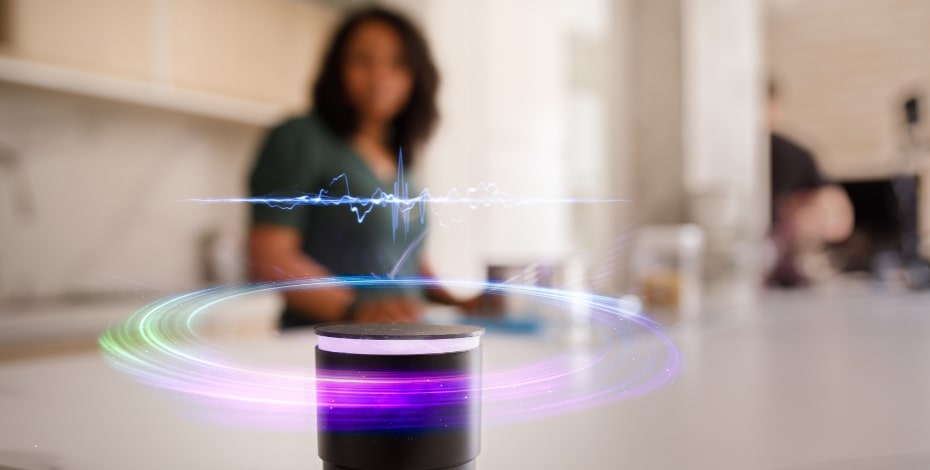
The image shows an Alexa device on a benchtop, with some swirling lines around it to indicate that its active. In the background a woman is looking at the device.
INMOTION 01 May, 2023

Alexa, please show me the exercise

Physiotherapy Research Foundation Seeding Grant recipient Dr Peter Nicklen talks about the use of intelligent internet devices like Alexa in delivering rehabilitation programs.

New intelligent internet technologies like Alexa, the voice-controlled virtual assistant developed by Amazon, offer novel ways to deliver exercise and other therapies to patients in their homes. 

An illustration of a pair of yellow lungs against a teal background.
INMOTION 01 May, 2023

Testing for desaturation in chronic lung disease

Kathryn Watson is the lead author on a study comparing the one-minute sit-to-stand test to the six-minute walk test for detecting which people with advanced lung disease are likely to desaturate with exercise.

Image shows a person from the chest down holding their hip as they sit down on a bed.
INMOTION 01 May, 2023

Can MRI findings predict future low back pain and disability?

Lead author Christopher Han APAM discusses a systematic review investigating whether some MRI findings can predict future low back pain and disability.

Your recent systematic review sought to estimate the extent to which MRI findings predict future low back pain,
associated disability and global recovery. Was your approach to reviewing the literature similar to that of your previous review on this topic?

An enhanced microscopic photograph of cancerous blood cells. The cells are red and the background is blurred.
INMOTION 01 May, 2023

Blood cancer management

Associate Professor Catherine Granger FACP answers some questions about her Invited Topical Review on physiotherapy management of blood cancers in adults.

Your Invited Topical Review recognises a diverse array of blood cancers. Does the evidence generally apply to all of them?

There are many different types of blood cancer. 

A man in a blue polo shirt stands in front of a powerpoint slide. He is giving a talk. On the side is a computer on a desk.
INMOTION 01 May, 2023

Physio Pitchfest ready to welcome new ideas

Physio Pitchfest offers physiotherapists a chance to show off their bright ideas and innovative products and services. Several past winners speak about their experiences and give some advice to would-be entrepreneurs.

It’s time to get your applications in for the Physiotherapy Research Foundation’s Physio Pitchfest, to be held at the APA’s IGNITE 2023 national conference in October. 

Hurry up, though—applications close at the end of May.

A pretty science lab of glass beakers and titration equipment displayed with flowers and herbs.
INMOTION 01 May, 2023

Research builds the evidence base

In our ongoing series, the APA Policy and Government Relations team continues to explore the benefits of physiotherapy research partnerships.

As discussed in the April issue of InMotion, the APA is partnering with academic institutions on research projects that advance knowledge in the field of physiotherapy and contribute to the evidence base underpinning our advocacy efforts.

This month we will look at three more research project partnerships.

A graphic illustration of a face is looking at a hand holding up the question mark symbol.
INMOTION 03 Apr, 2023

Find what you seek

The April issue of the Journal of Physiotherapy is packed with evidence to answer questions you may have considered in your clinical physiotherapy practice. 

Are we giving stratified care a fair trial?

Stratified care involves targeting treatment to subgroups of patients based on key characteristics such as prognostic factors, responsiveness to treatment and/or underlying mechanisms.

A woman is pushing another woman in wheelchair down a grey sand mat over the sand towards the water at the beach. The wheelchair has special  fat tires for sand.
INMOTION 03 Apr, 2023

Physio on the beach

Can you help? We are looking for survey participants in a Physiotherapy Research Foundation-funded project investigating beach-based physiotherapy for people living with disability.

Fifteen per cent of the world’s population currently lives with disability and it is considered a global human rights and public health issue (World Health
Organization 2015). 

Matching ends of a power cord connect, set on a yellow background as bright as the sun.
INMOTION 03 Apr, 2023

Research partnerships promote physiotherapy

ADVOCACY Partnerships with universities contribute to better outcomes for patients while raising the profile of physiotherapy, explains the APA Policy and Government Relations team.

A major aspect of the APA’s advocacy involves partnering on research projects to support the excellent work through which researchers are contributing to the field of physiotherapy (as discussed in the February 2023 issue of InMotion here).