
Five facts about physiotherapy after cardiac surgery
Physiotherapy plays an important role in recovery after cardiac surgery. From early mobilisation and respiratory management in hospital to progressive exercise and cardiac rehabilitation, physiotherapists support patients to regain function and return to everyday activities. Christie Marie Siatis of the APA Cardiorespiratory national group presents five discussion points about physiotherapy management following cardiac surgery.
1. Early mobilisation supports recovery after cardiac surgery
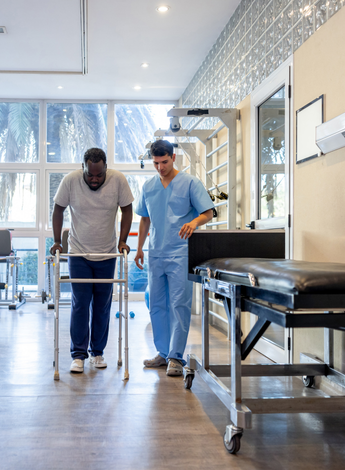
Patients can experience significant reductions in functional capacity and muscle strength following cardiac surgery.
Anaesthesia, surgical incision, cardiopulmonary bypass and mechanical ventilation can all contribute to this decline, while physical inactivity remains common following surgery (Kourek & Dimopoulos 2024).
Early mobilisation is therefore an important component of postoperative physiotherapy.
Evidence supports mobilisation compared with bed rest, with several studies demonstrating reductions in hospital length of stay.
Mobilisation can also support re-ambulation and cardiovascular recovery and contribute to the prevention of postoperative pulmonary complications, although the optimal timing and frequency remain uncertain (Eden et al 2023).
Mobilisation should be individualised to the patient’s functional capacity and clinical status.
Physiotherapy can progress from passive movement to active range-ofmotion and resistance exercises, sitting out of bed, walking, cycling and stair practice (Kourek & Dimopoulos 2024).
2. Respiratory physiotherapy should be targeted to patients most likely to benefit
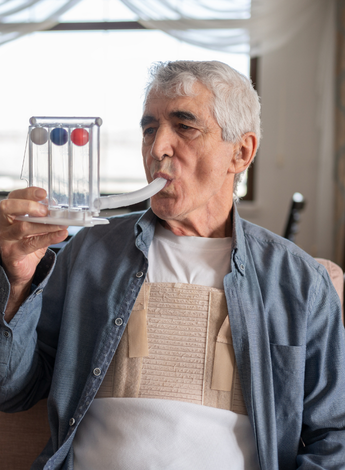
Respiratory physiotherapy following cardiac surgery aims to address problems such as retained airway secretions, reduced lung volume, breathlessness and increased work of breathing.
Interventions can include exercise, breathing and airway clearance techniques, positive-pressure therapies and other respiratory adjuncts (Eden et al 2023).
However, not every patient requires the same respiratory treatment.
Evidence suggests that targeted respiratory physiotherapy may be most beneficial for patients who have developed postoperative pulmonary complications or are at increased risk of respiratory compromise (Eden et al 2023).
The evidence supporting routine use of respiratory adjuncts is less clear.
Studies examining positive expiratory pressure devices and incentive spirometry have reported mixed findings.
In patients without postoperative pulmonary complications or pre-existing respiratory conditions, adjunctive respiratory treatments may not expedite recovery and should not necessarily be delivered routinely (Eden et al 2023).
Physiotherapy assessment and clinical reasoning are therefore important in identifying which patients are most likely to benefit from specific respiratory interventions.
3. Less restrictive sternal precautions may support functional recovery after median sternotomy
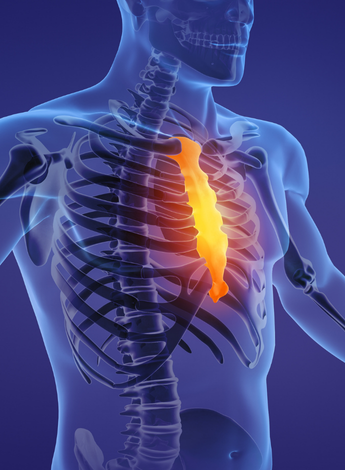
Patients undergoing cardiac surgery via median sternotomy have traditionally been advised to restrict upper limb movement and loading to protect the healing sternum.
However, there is considerable variation in how these precautions are applied.
An Australian survey found that 96 per cent of physiotherapists prescribed upper limb and trunk exercises following median sternotomy, while 95 per cent placed some form of restriction on these exercises.
There was little consensus regarding the type, commencement or duration of sternal precautions, with patient-reported pain commonly guiding exercise progression (Balachandran et al 2015).
More recent evidence supports less restrictive, function-based approaches.
Keep Your Move in the Tube allows upper limb loading while keeping the arms relatively close to the trunk to minimise excessive stress on the sternum.
Studies have found that this approach can increase the proportion of patients discharged directly home without increasing wound complications or hospital readmissions (Eden et al 2023).
Overly restrictive precautions may make activities such as bed mobility and sit-tostand more difficult, potentially affecting recovery, hospital length of stay and care needs following discharge (Eden et al 2023).
4. Exercise should be individualised and progressively advanced throughout recovery

Recovery following cardiac surgery extends beyond regaining basic mobility in hospital.
Patients can experience reductions in exercise capacity, muscle mass and quality of life, highlighting the importance of progressive exercise throughout recovery (Kourek & Dimopoulos 2024).
Exercise should be tailored to the patient’s functional capacity and stage of recovery.
Early rehabilitation may begin with passive movement before progressing to active range-of-motion and resistance exercises. Functional activities such as sitting out of bed, walking, cycling and stair climbing can then be introduced and progressed according to the patient’s capacity (Kourek & Dimopoulos 2024).
As recovery progresses, physiotherapists can support the transition from basic mobility to structured aerobic and resistance exercise.
Cardiopulmonary exercise testing is considered the gold standard for assessing exercise capacity and can assist with optimal prescription of aerobic exercise intensity (Kourek & Dimopoulos 2024).
An individualised and progressive approach enables exercise to be adapted to the patient’s abilities and changing rehabilitation needs throughout recovery.
5. Cardiac rehabilitation is an important part of longer-term recovery after cardiac surgery
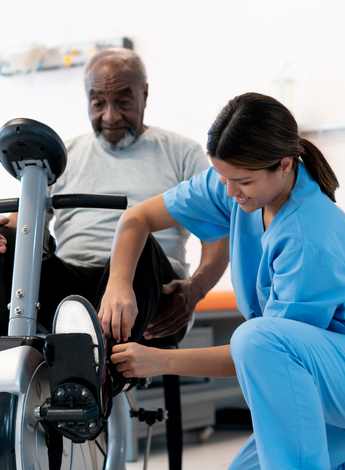
Cardiac rehabilitation is a medically supervised program designed to maintain or improve cardiovascular health and is an important component of recovery following cardiac surgery.
It has beneficial effects on functional capacity, endothelial and skeletal muscle function and quality of life (Kourek & Dimopoulos 2024).
Cardiac rehabilitation following cardiac surgery has also been associated with lower two-year mortality.
Despite its recognised benefits, participation remains underutilised because of low rates of referral, adherence and compliance (Kourek & Dimopoulos 2024).
Physiotherapists have an important role in supporting exercise and physical activity throughout rehabilitation.
Assessment of functional and exercise capacity can inform individualised aerobic and resistance exercise prescription and progression, helping patients rebuild strength and endurance following surgery.
Emerging approaches including telemedicine and virtual cardiac rehabilitation may also improve access, adherence and compliance with rehabilitation programs (Kourek & Dimopoulos 2024).
>> Christie Marie Siatis APAM is a physiotherapist with experience across acute hospital settings and a background in research. She currently works in planned care and health service improvement within the South Australian Department for Health and Wellbeing and is chair of the South Australian branch of the APA Cardiorespiratory national group.
Quick links:
- References
- Infographic – coming soon
© Copyright 2026 by Australian Physiotherapy Association. All rights reserved.