Defining mental health physiotherapy
Mental health physiotherapy is not just associated with acute mental health services. It’s increasingly important across all settings. Mental health physiotherapist Dr Ryan McGrath discusses how mental health physiotherapy fits into clinical practice and the foundational skills and knowledge needed by all physiotherapists.
For some physiotherapists, the idea of treating the mind as well as the body might seem beyond the scope of the profession.
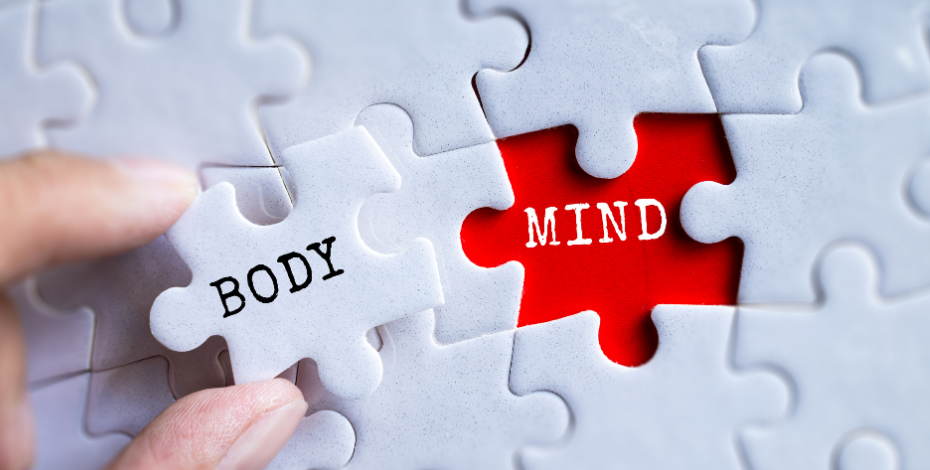
There is increasing awareness, however, of the links between mind and body and a growing recognition that treating physical health can positively affect mental health as well.
Dr Ryan McGrath MACP, a physiotherapy researcher and educator at La Trobe University’s Rural Health School in Bendigo, Victoria, has been working at the intersection of physiotherapy and mental health since he was an undergraduate.
Ryan recently led an international consensus study exploring the definition of mental health physiotherapy.
The study involved 141 participants from 22 countries, all members of the International Organization of Physical Therapy in Mental Health, has published a paper in the journal Physiotherapy identifying themes related to mental health physiotherapy and developing a core definition of mental health physiotherapy (see breakout below).
The study lays the foundation for future collaboration to develop global education standards, competency frameworks and consistent practice guidelines, he says.
Four common themes were identified by the study about the defining attributes of mental health physiotherapy: mental health physiotherapy requires biopsychosocial integration, mental health physiotherapy connects the body and mind, mental health physiotherapy extends beyond mental healthcare settings, and mental health physiotherapy encompasses diverse and varied practices.
Ryan says many people assume that to be a mental health physiotherapist or to be interested in that area or practising out of that field means working in a traditional mental healthcare setting, working with clients with specific mental health diagnoses or working in a multidisciplinary team.
In reality, though, mental health physiotherapy can be broadly practised across many areas, including pain, neurological physiotherapy and disability.
‘We want to put a line in the sand to make it very clear that the field of practice is not restricted to one area.
'Any physio with the right training and approach can practise mental health physio.’
One question that Ryan hears often, and which the published paper wanted to try to answer, is ‘What is mental health physiotherapy?’ followed by ‘What do you offer that’s different from other professionals?’
‘We’re not coming in and trying to be psychologists or counsellors. We’re not trying to make a mental health diagnosis.
'Physiotherapists have an excellent foundation in physical health and wellbeing and so if we have that additional scope or additional expertise in mental health, that means we sit nicely in the intersection of the body and the mind.
'That’s the orientation of our practice.’
He says it’s about being attuned to both the mind and the body and keeping an eye on a patient’s overall mental health.
‘I don’t think there is a setting that a physio can’t apply a mental health lens to.
'We’ve got physios working in the disability and neurological space who start to think, “How can we improve someone’s mental health status using the tools that we have as physios?”
'And in some cases, physios have done additional training in cognitive behavioural therapy and often that is directed at the mind–body interface.
'We try to dichotomise the mind and the body but in reality, they can’t be separated. That’s the tension I think we have sometimes in describing what mental health physiotherapy is.
‘We may be interested in stress, anxiety, sleep and a range of other factors in relation to how they can improve or reduce someone’s pain or improve their functioning and their wellbeing.
'Mental health is something we can, as physios, directly make an impact on. But we’re definitely not leaving the body behind.’

Dr Ryan McGrath MACP.
While movement, physical activity and exercise were identified as core components of mental health physiotherapy, the consensus recognised that other approaches were also being used by physiotherapists, including motivational interviewing, coaching, cognitive behavioural therapy, relaxation techniques and mindfulness.
‘One thing that stood out in this area of physio is that, at least from an international perspective, there are a lot of different approaches that people are using, drawing on that physical health and mental health skill set to improve mental and physical health outcomes.
'From a mental health physio’s perspective, we are still very interested in looking at experiences or outcomes that are related to pain and physical health but it’s about being sensitive to both mind and body in terms of what you’re trying to improve, achieve or support.’
The research team that Ryan is involved with is in the process of publishing a second paper examining the foundations and core competencies of mental health physiotherapy that they believe every physiotherapist should have as well as existing skills that can be used to improve mental health outcomes in patients.
Ryan hopes this will assist in building pathways to mental health physiotherapy competency that is flexible and broadly applicable to most physiotherapy settings.
‘A second paper is being developed that explores the mental health competencies that every physiotherapist needs to know.
'They might not be a mental health physiotherapist, or they might not necessarily have that level of expertise, but we would argue that there’s a foundational level that all physios need to have.
'What are the different skills and strengths that physios can bring to improve mental health outcomes for the people that we work with?’
Many physiotherapists, especially those who work in pain, neurological physiotherapy, disability and women’s health, are already practising mental health physiotherapy, he says, although they might not call it that.
‘We don’t have the scaffold or the foundation to be able to describe that.
'And so that’s what this paper is hoping to do – open up what we call mental health physiotherapy so we can build on it.’
He hopes that people interested in improving the mental health outcomes of their patients will look to the APA’s Mental Health national group for a community of like-minded physiotherapists.
In many ways, Ryan says, the paper marks a philosophical shift rather than defining a new way of practising. It’s a way of viewing practice rather than moving things away from some setting or patient group.
‘You don’t have to be a mental health physio working with people with diagnosed mental health conditions.
'It’s not defined by a patient population and it’s not defined by a setting. And that’s the challenging part.’
Read the paper published by the consensus.
The definition of mental health physiotherapy
The following definition of mental health physiotherapy was developed by the researcher group based on the consensus study findings.
‘The core of mental health physiotherapy is to optimise wellbeing and empower individuals and communities through an explicit focus on both the mind and body.
'Mental health physiotherapists provide psychologically informed physiotherapeutic care for individuals across the spectrum of mental health to improve physical, cognitive, emotional and behavioural wellbeing.
'They have the expertise to integrate physical and mental health, and are able to understand, assess, and respond to the dynamic interaction between biological, psychological and socio-cultural factors.
'Mental health physiotherapists provide holistic, person-centred, evidence-based care in the spheres of integrative health promotion, prevention, treatment and rehabilitation.
'Mental health is relevant to all areas of physiotherapy practice, across the lifespan and in all settings.’
© Copyright 2026 by Australian Physiotherapy Association. All rights reserved.