
How workplaces shape AI adoption
ARTIFICIAL INTELLIGENCE Pete Haynes looks at the difference in AI adoption between different types of organisations and asks what they can learn from each other.
AI tools are increasingly being adopted in Australian physiotherapy practice.
However, the speed and process of adoption may be influenced by organisational context.
An AI scribe that listens to a consultation and drafts a clinical note provides a useful example.
To explore how the same tool might be adopted in different workplaces, consider the following hypothetical situations.
A small private practice
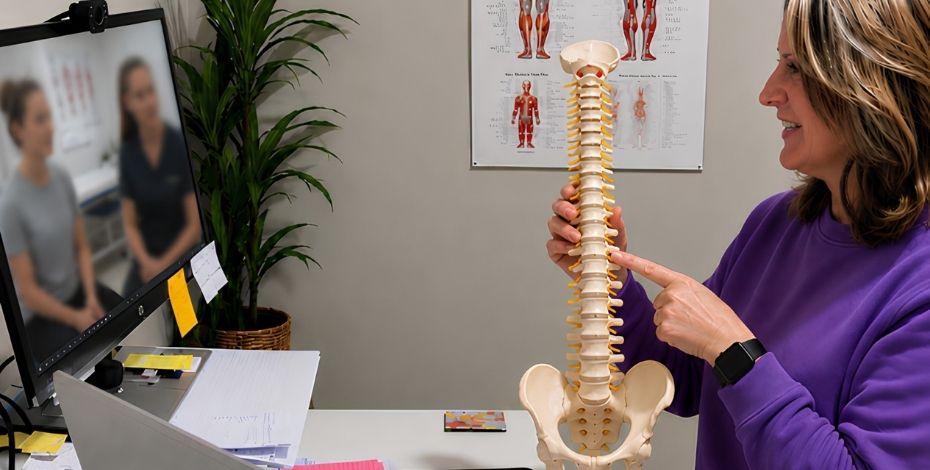
‘Sally’, the owner of a four-person private clinic in a rural town, reads an article that mentions the AI scribe tool.
That night she reads the vendor’s website and signs up for a trial.
By the end of the week she is using it with consenting clients.
Sally’s situation has some clear advantages.
She is able to make the decision herself, she can see the effect on her own patients and documentation within days, and she can change how she uses the tool, or indeed change to a different one, at any time to better meet her needs.
The disadvantage is that Sally is also responsible for the privacy, IT and contract decisions that a larger organisation would give to specialist staff.
She accepts the vendor’s standard terms when she signs up and is not in a position to negotiate them, even though those terms determine where recordings are stored, whether patient data is used to train the vendor’s AI model and how long information is kept.
Sally also needs to check whether the scribe works with her practice software.
Manual copying may be manageable in a small clinic but adds steps and the risk of saving a note to the wrong patient record (Safer Care Victoria 2025).
She can change systems relatively easily, though the cost may limit her options.
A large public health service
‘John’, a physiotherapist in a large public health service in Melbourne, reads the same article but he has also read Safer Care Victoria’s advisory on ambient AI scribes, which says that individual clinicians ‘should not be adopting tools without the knowledge and approval of their organisation’ (Safer Care Victoria 2025).
So he submits a request to his department, which triggers a process that involves a privacy impact assessment, a cybersecurity review and procurement.
Metro South Health, a major public health service in Queensland, began rolling out an AI scribe in June 2026 and it was reported that the rollout is expected to take more than a year (MobiHealthNews 2026). The slower process does provide benefits.
The Victorian advisory expects patient data to be stored in Australia, a privacy impact assessment before use, documented patient consent and staff training (Safer Care Victoria 2025).
A large health service employs people with the expertise to check each of these requirements and it can require a vendor to meet conditions before it is chosen, then hold the vendor to them in a contract.
A large health service also needs to consider how the scribe will work with its existing software.
IT staff can check how notes are transferred and who can access them but connecting a new tool to older systems may require changes and support from software providers.
This can add time and cost, even when the scribe itself works well (ACSQHC 2025).
The disadvantage is the delay, which carries its own risks. Each step in the approval process may be reasonable but clinicians like John may become frustrated by a lack of visible progress while colleagues in private practice are already using these tools.
This may tempt them to use AI tools of their own choosing that have not been approved for use with patient or organisational information, creating a situation the safeguards were designed to prevent.
The same obligations in both settings
Although Sally and John work in very different organisations, their professional obligations are the same.
Ahpra’s guidance on AI applies to every registered physiotherapist, who must understand the tool, be transparent with patients, obtain consent and remain accountable for the patient record (Ahpra 2024). The difference is in the support each of them has to meet those obligations.
Both organisations must also protect patient information.
The Privacy Act 1988 covers private health providers, including small practices.
State and territory laws govern public services and may also apply to private providers (OAIC 2025).
The applicable laws vary but Sally’s clinic size does not exempt her from privacy obligations.
It is difficult to know how well practices are navigating these obligations in adopting AI tools.
Many vendors state that data is stored in Australia but an independent review by Digital Rights Watch (2026) found that most also rely on third-party providers whose location is unclear and that AI vendors differ on whether patient data is used for training.
Sally would need to check the terms herself. A 2026 survey of 1535 GPs found that only a quarter of practices had an AI governance policy (Medical Republic 2026) but similar data for physiotherapy practices could not be found.
Regulation of these tools is also still developing.
The Australian Commission on Safety and Quality in Health Care warns that a scribe that suggests a diagnosis or treatment that was not raised by the health professional in the recording may count as a medical device and need registration with the Therapeutic Goods Administration (ACSQHC 2025).
This means that software updates that could add a feature and change a tool’s regulatory status must be monitored, which may be more difficult for less-resourced organisations.
Each strength has a matching weakness
When the two settings are compared, their strengths and weaknesses come from the same characteristics.
Sally’s clinic can adopt a tool quickly because only one person is involved in the decision and it has little oversight for the same reason.
John’s health service provides one consistent standard for thousands of clinicians but that standard may not suit the needs of every department.
Its governance processes prevent harm but they also create the delays that tempt clinicians to work around them.
What each can learn from the other
Private practices can make use of work the public sector has already done.
Sally could use the freely available Victorian advisory (Safer Care Victoria 2025) to guide questions about consent, note review and software integration.
She also needs to establish where data goes, whether it is used for training and how long it is retained. Writing down the answers, checking them against the practice’s privacy obligations and addressing any gaps would give Sally a practical way to assess whether the tool is suitable.
Small practices can also work together to share the work of checking vendors’ terms and choose only those that meet the standard.
Public health services can learn from the speed and flexibility of private practice. A small, time-limited pilot with a few interested clinicians can quickly produce practical evidence to inform tool selection, which a committee evaluation alone cannot provide.
Lower-risk uses of AI could follow a shorter approval pathway than higher-risk uses.
The clinicians who will use the tool, like John, should be involved when it is chosen and an agreed plan for stopping a trial makes it easier to approve one in the first place.
In both settings, a tool needs to keep being monitored after it has been adopted, including the accuracy of the notes, the consent process and any software updates.
The standard should not depend on the setting
Patients should be able to expect the same consent, the same transparency and the same care with their information wherever they are treated.
How organisations of any size can govern AI well enough to achieve this is the next question and a more difficult one.
A follow-up article in the next issue will explore how organisations can balance these safeguards with opportunities to adopt useful AI tools.
References.

Pete Haynes is a physiotherapist and allied health educator in Albury, New South Wales. His writing explores healthcare, technology and clinical practice.
© Copyright 2026 by Australian Physiotherapy Association. All rights reserved.