Flying high on top career choice
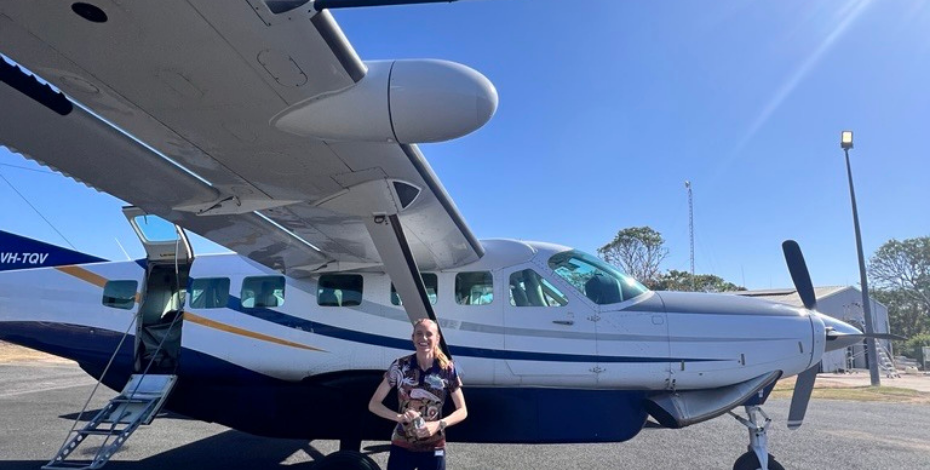
Imogen Lewis is a rural generalist physiotherapist working with the Cape York Allied Health Outreach Team, travelling by small aircraft from Cairns to five remote communities across central Cape York. Imogen’s work demands clinical breadth, adaptability and cultural understanding as well as a willingness to spend hours in the air to bring physiotherapy close to people who might otherwise have little or no access to it.
When Imogen Lewis APAM starts a working week in Cape York in far north Queensland, there is a good chance it will begin before sunrise at Cairns Airport.
The destination might be one of five vast remote communities across the Cape – Aurukun, Lockhart River, Pormpuraaw, Kowanyama or Coen – with the flight taking between 90 minutes and two and a half hours.
It can sometimes be a bumpy ride but the routes cover some of the wildest, most rugged and most beautiful terrain in the country’s north. And Imogen never tires of her aerial view.
The flights are more than a convenient way of getting to work; they are fundamental to the model of care.
The five communities are sufficiently remote that driving from Cairns can take 12–15 hours or more, while the wet season can see roads cut off and communities isolated and inaccessible due to flooding for half the year.
The Cape York Allied Health Outreach Team – of which Imogen was, until recently, the only physiotherapist – was set up in 2023 to address inequitable access to health services across those five communities.
By the time Imogen disembarks the 12-seater plane at her destination, she has little time to settle in.
She is often in a primary health centre by 9am and ready to see her first patient of the day.
It’s the beginning of a three-to-four-day stay that requires team members to be housed on location.
Accommodation is provided in local council accommodation or by Queensland Health and the duration onsite allows for relaxation time in the evenings to explore, exercise and admire the spectacular north Queensland sunsets.
Imogen joined the service in early 2024, bringing with her a background that had already pointed her towards public health and regional practice.
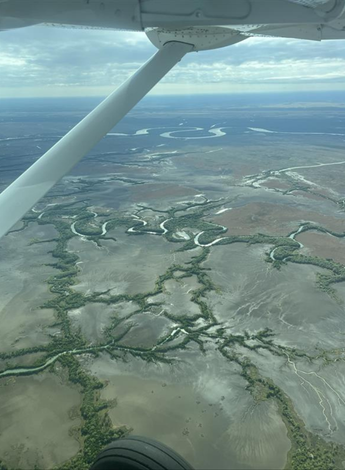
The view over Pormpuraaw from the air.
She studied physiotherapy at the University of Queensland in Brisbane and graduated in 2019, attracted to a profession that combined her interest in health and the human body with practical, hands-on work and a broad range of career options.
After graduating, Imogen spent her early career at Cairns Hospital, an obvious homecoming for someone who grew up there.
The opportunity to work as part of the new outreach service offered Imogen a very different kind of physiotherapy career.
Initially, the team had just one physiotherapist. However, a second permanent physiotherapist was recently appointed to cater to increasing demand for physiotherapy services.
The team also includes an occupational therapist, a speech pathologist, a dietitian, a social worker and a podiatrist, all supported by an allied health manager and administration staff in Cairns.
The allied health outreach team works closely alongside other professions in the clinics including nurses, midwives, child health nurses, GPs and visiting medical specialists – cardiac, respiratory, general medicine and paediatric.
The service model was designed around interdisciplinary care, care closer to home and the ability to respond to acute, subacute and chronic presentations across the life span.
A typical outreach trip lasts three to four days, meaning the aircraft becomes a regular part of Imogen’s working life.
She estimates she spends at least three to four hours in the air each week, travelling on small passenger aircraft because of
their reliability and suitability for the remote routes – across wet and dry seasons.
Once on the ground, the outreach team works from nurse-led primary healthcare centres alongside local nurses, health workers and visiting medical staff, including GPs supported through the Royal Flying Doctor Service.
There are usually some planned appointments, Imogen says, but referrals can happen spontaneously in the corridor, with a nurse or GP asking her to assess an acute injury or provide an opinion on the next step in management.
‘There’s no typical day.’
That unpredictability has become one of the things that Imogen enjoys most.
Her case load ranges from musculoskeletal presentations such as low back pain and acute knee and ankle injuries to chronic disease management, postoperative rehabilitation, neurological presentations and paediatric physiotherapy.
The breadth of referrals reflects the realities of rural generalist practice, Imogen says.
The team also conducts home visits for those who are recovering from stroke, post-surgical or unable to travel to one of the primary healthcare centres.
Working both at the primary healthcare centre and in people’s homes requires Imogen to think on her feet, use her problem-solving skills and identify a variety of care pathways as befits the patients before her.
‘A lot of the time it might be physiotherapy in that initial consult, where someone’s presented with knee pain or back pain, and then from that review, we might have to escalate for the patient to get further investigations, blood work and a medical review.’
That sometimes requires the patient to travel further afield to a setting where there is access to a hospital (Cairns) or trauma centre (Townsville) for appropriate workup.
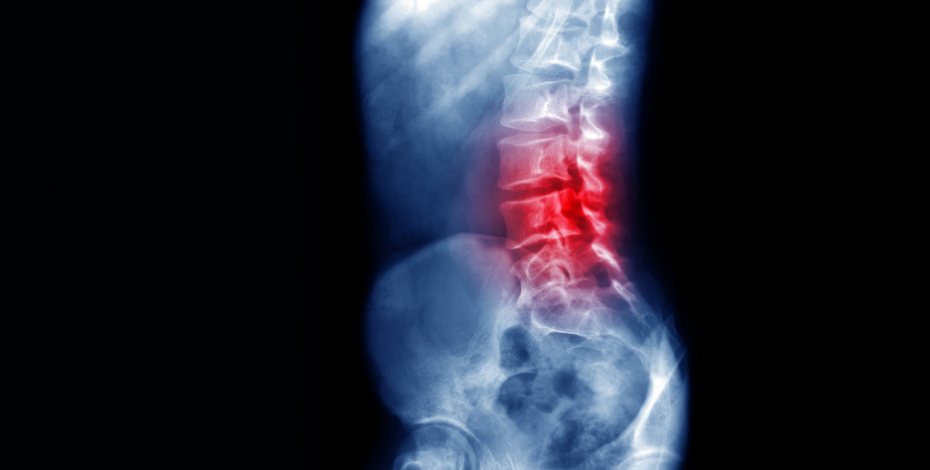
The same applies to medical imaging. While X-rays can be performed locally, radiology reporting can take up to two weeks.
That means Imogen has had to develop her skills in image interpretation – she is currently undertaking a radiology course through
the University of Melbourne – so she can make an appropriate clinical decision while the patient is still in front of her rather than waiting on a formal report.
‘You can’t wait until the report comes back to make a judgement on what to do with that patient.’
It is a good example of how rural generalist practice can stretch a physiotherapist’s scope of knowledge and clinical confidence. Imogen identifies problem-solving, flexibility and adaptability as essential, along with exposure to a broad range of presentations across paediatrics, acute care, chronic disease and care for older people.
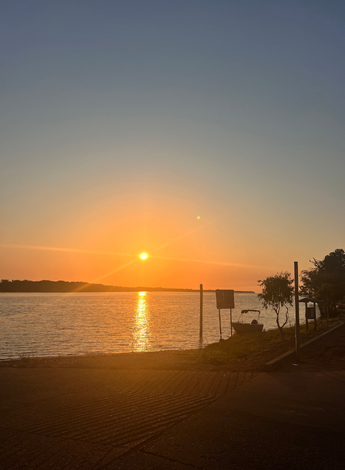
The team enjoys spectacular sunsets while on location in Cape York.
Clinical flexibility also means being willing to change where care happens.
Imogen says a patient may be seen in the primary healthcare centre, at home or in another familiar community setting such as at a school, kindergarten or aged care centre or on Country.
The service model supports a range of delivery models including individual consultations, group therapy, shared care, delegated care, care coordination, skill sharing and virtual care.
Building a therapeutic relationship in that environment requires more than transferring metropolitan clinical processes to a remote setting.
Imogen says the outreach clinicians rely heavily on the people who live and work in the communities, including local healthcare workers, administration staff and drivers, because they understand the community and its people in a way the fly-in fly-out clinicians cannot.
She says those relationships are fundamental to patient engagement and understanding how her services can best support community members.
‘The primary healthcare centre full-time staff really know best.’
Cultural safety is firmly embedded in clinical practice, Imogen says.
The service model emphasises culturally safe, evidence-informed care and ongoing cultural capability, including opportunities for cultural supervision and reflective practice.
‘It’s such a privilege to get to work in these remote communities and learn from community members.
'I think it’s made me a better clinician and a better person as a whole and definitely improved my clinical skills working in such a challenging, unique environment.’
The experience has changed Imogen as a clinician. However, she is equally clear that the remote communities and the people who live there have taught her much beyond clinical practice.
She has learnt about different cultures, languages and histories through conversations with community members and participation in local events, while the challenges of remote practice have required her to become more confident in decision-making, recognising red flags and advocating for patients.
Imogen says that after work the team might take a walk to the boat ramp to watch the sunset, go for a run or explore the natural landscape.
Then a few days later, it is back to the airstrip, the small aircraft and the flight to Cairns.
The scenery may change dramatically but the purpose of the journey remains the same – to deliver physiotherapy care to people who should not have to leave their community to receive it.
© Copyright 2026 by Australian Physiotherapy Association. All rights reserved.