Exercise and physical activity

Person clutching their abdomen in pain.
INMOTION 29 Oct, 2025

Exercise training for endometriosis pain

Norwegian and Australian researchers conducted a randomised trial with 81 women with endometriosis to investigate the impact of supervised exercise and pelvic floor muscle training on pelvic and genital pain. Lead author Rakel Gabrielsen agreed to answer some questions about the trial.

What motivated you to test supervised exercise and pelvic floor muscle training as part of pain management for people with endometriosis? 

Two older woman are walking together in a park
INMOTION 26 Sep, 2025

APASC2025: exercise for the older brain

Canadian researcher Teresa Liu-Ambrose is a keynote speaker at APASC25. Here she answers some questions from physiotherapy researcher Dr Jo-Aine Hang about her upcoming presentation.

What practical strategies would you suggest are the most useful for promoting better cognitive and physical health in older adults? 

Being physically active on a regular basis. 

Activity can mean going for a walk with your grandchildren or walking to the neighbourhood coffee shop with a friend. 

The image is of an older woman on an exercise bike.
INMOTION 26 Sep, 2025

APASC2025: Intensity matters

APASC25 keynote speaker Associate Professor Chris Burtin talks to lecturer and physiotherapist Dr Georgina Whish-Wilson about exercise approaches for patients with chronic respiratory conditions.

Why is intensity important when prescribing exercise to patients with chronic respiratory conditions? 

The physiological stimulus to the muscles and heart during exercise is dependent on intensity. 

Therefore your choice of exercise intensity matters. 

A woman with cancer is outside exercising
INMOTION 10 Sep, 2025

APASC25: exercise can increase cancer survival

Physiotherapy lecturer and researcher Dr Lara Edbrooke talks to Dr Vin Cavalheri about what to expect from his keynote presentation for the Cancer, Palliative Care and Lymphoedema stream at APASC25.

Can you share the main findings from your lung cancer research? 

The main findings of my research are that exercise is safe, feasible and beneficial across lung cancer stages (including early-stage, pre- or post-surgery and in advanced disease). 

The image is a cartoon representation of lifestyle medicine with a doctor surrounded by images of healthy food, exercise, and more
INMOTION 10 Sep, 2025

APASC25: integrating lifestyle approaches

Lifestyle medicine physician Dr Jenny Brockis will deliver a keynote address for the Mental Health stream at APASC25 and present a half-day pre-conference workshop. Ruth Lira, chair of the Western Australia branch of the Mental Health national group, asks her how physiotherapists can integrate lifestyle medicine into their practice.

What is lifestyle medicine, and is it possible for physiotherapists to blend and integrate lifestyle medicine into patient care? 

Older couple walking together happily
INMOTION 27 Aug, 2025

Boost mediation analysis

Researchers from the University of Exeter and collaborators across the UK and Australia analysed data from the BOOST trial, a major physiotherapy study that tested a 12-week program for older adults with painful walking due to lumbar spinal stenosis. Lead author Dr Lianne Wood and author Dr Esther Williamson agreed to answer some questions about the research.

Can you start by briefly summarising the design and findings of the BOOST study? 

Woman with cancer walking upstairs
INMOTION 25 Aug, 2025

Delivering structured exercises post-cancer diagnosis

PD PROFILE Professor Anna Campbell, who designed ‘Cancer and exercise rehabilitation’, answers some questions about the course.

Person is holding their calf muscle. Image of lower legs only, in sneakers, with a road in the background.
INMOTION 28 Jul, 2025

Up to date with tendons in sport

Associate Professor Ebonie Rio, who presents ‘Sports Physiotherapy Level 3’ alongside Professors Craig Purdam and Jill Cook, answers some questions about the latest version of the course.

What does this course cover? How is it structured? 

The course aims to elevate physiotherapists’ clinical reasoning in tendon injury diagnosis and management. 

A man doing stretches at home
INMOTION 28 Jul, 2025

Leading the way for better clinical outcomes

JOURNAL OF PHYSIOTHERAPY Read about the latest research covered in the July issue of the Journal.

EXERCISE MANAGEMENT OF KNEE OSTEOARTHRITIS 

Researchers from Australia, America and the United Kingdom published a narrative review outlining recent research highlights and uncertainties in the exercise management of knee osteoarthritis (OA) published in the past five years. 

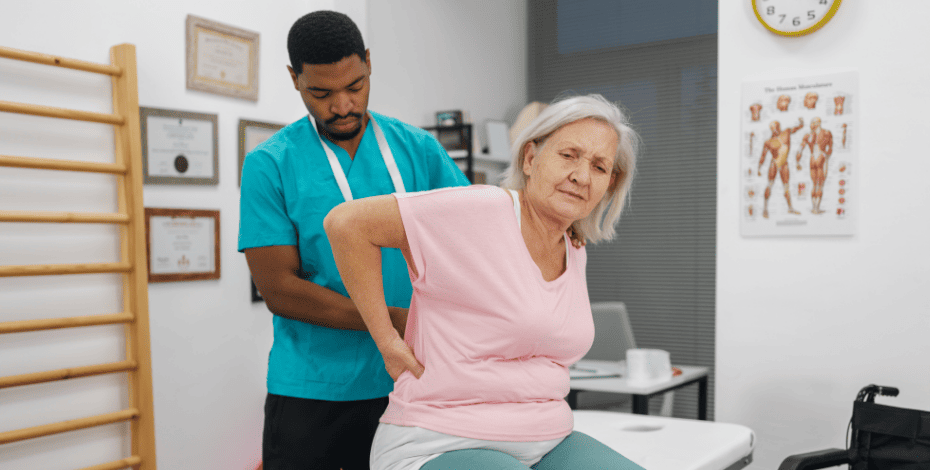
A male physiotherapist examines the back of his female patient, who is sitting on the exam bed.
INMOTION 01 Jul, 2025

Low back pain: what works and what doesn’t

LOW BACK PAIN While dozens of low back pain treatments have been tested in patients, two recent systematic reviews using meta-analysis to compare data from multiple trials have shown that very few treatments have enough high-quality evidence about their efficacy.

Low back pain (LBP) is a common and debilitating musculoskeletal condition and the leading cause of disability worldwide—around 25 to 30 per cent of people with acute LBP will go on to develop persistent and disabling chronic pain.