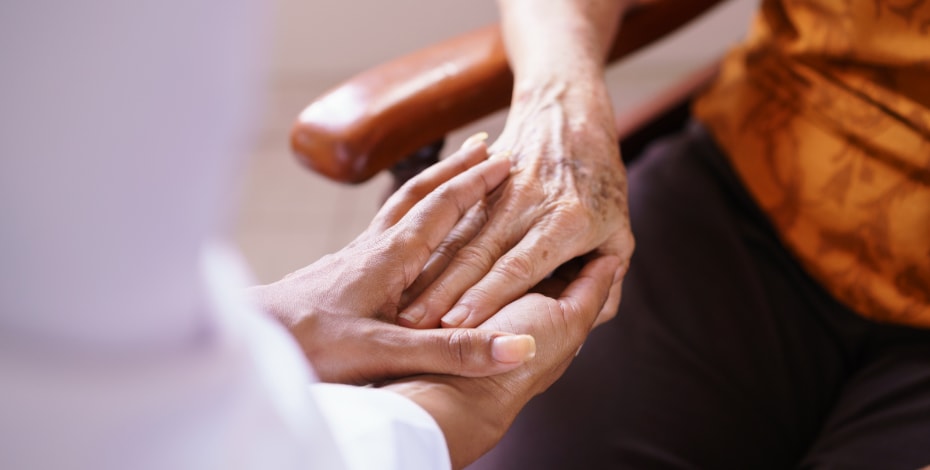
CareSearch Research Associate Susan Gravier and Redcliffe Hospital Cancer Care and Palliative Care Services senior physiotherapist Nicola Khamis discuss helping people manage pain at or near the end of life.
Gemma Bettens and Dr Abigail Billin give a psychological perspective to understanding the role of thoughts and emotions on behaviour in patients with pain.
Outlining the framework that is helping vulnerable populations better access pain management services in New South Wales formed the premise of Jenni Johnson’s plenary ‘Pain Management: a wicked problem for vulnerable populations’. Melissa Mitchell reports.
The 2019 Australian Pain Society’s 39th annual scientific meeting on the Gold Coast was held in April to coincide with the International Association for the Study of Pain (IASP) Global Year Against Pain in the Most Vulnerable. Here, selected presenters detail their work in various pain-related fields that have implications for clinicians working in pain as well as communities affected by it.
As the body of knowledge of pain science grew and evolved, so too did a group of passionate physiotherapists seeking recognition for peers and colleagues working in the field of pain management. Lois Tonkin, Tim Austin and Dianne Wilson explore the journey towards the formation of the APA Pain group.
Pain is the focus of this issue of InMotion magazine and it brings views from an impressive range of experts in pain management and includes a history of the APA Pain group.
My pain expertise is as a patient who has experienced healthcare in the United States, United Kingdom and Australia. My unscientific conclusion is that physiotherapists are often the key to understanding how pain affects patients holistically.
Michael Ryan, FACP, will co-present with Darren Beales, FACP, and Trudy Rebbeck, FACP, ‘The complete and advanced lumbar spine and pelvis’ course next month.
APA Women’s, Men’s and Pelvic Health group members Amanda Lee, Tarryn Lawrence, Tory Toogood, Rachel Andrew and Sarah Walsh contribute five discussion points about pelvic pain, and offer examples of how physiotherapy intervention can benefit patients experiencing a range of pelvic pain presentations.
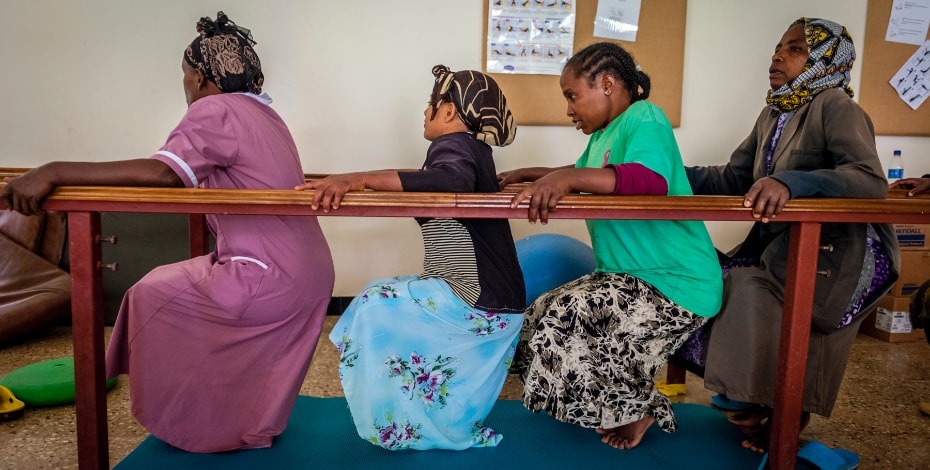
Physiotherapy rehabilitation is a critical element in the treatment of obstetric fistula. Hamlin Fistula Ethiopia is dedicated to restoring the health and dignity of women who have survived the horrendous—and preventable—childbirth injury.
When Abeba arrived at Hamlin Fistula Ethiopia’s hospital in the Ethiopian capital of Addis Ababa, she was in a wheelchair, and could barely move her legs—let alone stand on her own two feet.