Research

Photo of a physiotherapist helping a patient to stretch their knee joint.
INMOTION 01 May, 2024

A snapshot of the management of people with knee osteoarthritis in private physiotherapy practice

An analysis of primary care physiotherapy management of knee osteoarthritis (OA) in an Australian setting has shown that while the level of treatment didn’t meet minimum clinical practice guidelines, participant improvement at three months reached minimally important change thresholds for patient-reported measures and satisfaction was high.
The image shows a person's legs from the knee down and from behind. They are holding onto their calf muscle with their hands.
INMOTION 02 Apr, 2024

Understanding risk factors for calf muscle strains

In a study funded by the Physiotherapy Research Foundation with support from PRF corporate partner ASICS, Brady Green is aiming to better understand the factors predisposing football players to calf muscle strain injuries, with an eye to better management and prevention.

Calf muscle strain injuries (CMSI) are one of the more prevalent sports injuries, with a far- reaching impact on all kinds of athletes— from recreational sportspeople to elite professionals—across a wide spectrum of sports, codes and ages.

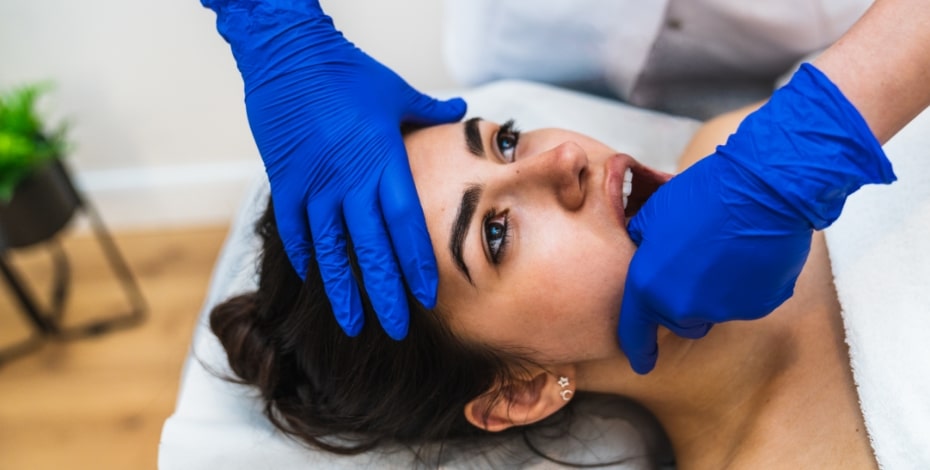
A woman is lying on an examination table. A person is manipulating her jaw. They are wearing blue gloves on their hands.
INMOTION 02 Apr, 2024

The little-known role of physio in TMD care

Alana Dinsdale is investigating why physiotherapy is under-utilised in the treatment of temporomandibular disorders. Here she talks about her new study, which was recently awarded a PRF Seeding Grant.

Temporomandibular disorders (TMDs) are a group of musculoskeletal conditions affecting the jaw.

People with TMDs can experience significant problems with eating, socialising, working and intimacy due to jaw pain, locking, disturbing joint sounds and fear.

window covered with soap being cleaned by squeegee
INMOTION 02 Apr, 2024

Clear answers to clinical questions

JOURNAL OF PHYSIOTHERAPY The April issue of the Journal answers some important questions about clinical physiotherapy practice, writes the scientific editor, Mark Elkins.

physiotherapist adjusting patients neck from behind
INMOTION 02 Apr, 2024

5 facts about persistent post-concussion symptoms

Katie Davies, Megan Hamilton, James McLoughlin and Emma Warner of the APA Neurology national group present five discussion points about persistent post-concussion symptoms.

An elderly man has fallen over next to his bed. A walking stick is on the floor next to him.
INMOTION 01 Mar, 2024

Effective falls prevention in aged care

Australian and international researchers have revealed that devastating falls in residential aged care homes could be prevented by using gold standard approaches of regular exercise and a personalised falls prevention plan.

A person wearing jeans and a beige top is holding their stomach.
INMOTION 01 Mar, 2024

Aboriginal and Torres Strait Islander women's and men's pelvic healthcare needs improvement

Pelvic health conditions among Aboriginal and Torres Strait Islander women and men are under-recognised and under-reported despite being a significant burden, say a group of Australian researchers who have recently published a systematic review of pelvic healthcare in Aboriginal and Torres Strait Islander women and men.

student physiotherapists assist a patient (played by another student). The patient is wearing clothes and a mask to make them appear elderly.
INMOTION 01 Mar, 2024

Training students to be patients

An important part of physiotherapy training is practising skills, with students playing the role of both the therapist and the patient. Physiotherapy Research Foundation Seeding Grant recipient Narelle Dalwood talks about why learning to portray the patient well has positive benefits for students.

Simulation-based learning is an important part of physiotherapy education.

It allows students to practise their communication, decision making and hands-on skills in an environment closer to a clinic than a classroom.

A clinician wearing a white lab coat is talking to a man in a wheelchair. A nurse in blue scrubs is pushing the chair.
INMOTION 01 Mar, 2024

Easing the transition from ICU to home

Physiotherapist Alisha da Silva has received a Physiotherapy Research Foundation Seeding Grant to co-design a website for patients returning home from the ICU.

Intensive care unit (ICU) survivors often face a long process of recovery as they transition from the ICU to a hospital ward and then home.

In addition, patients who have been critically ill are at risk of developing post- intensive care syndrome (PICS), a collection of health problems that may affect their cognitive ability, physical health and mental health.

A woman with dark hair in a bob, wearing a white shirt. She has a green lanyard around her neck.
INMOTION 01 Mar, 2024

Culturally appropriate arthritis education resources for Aboriginal people

The first culturally appropriate education resources for Aboriginal and Torres Strait Islander people with arthritis have been developed, in a process based on community engagement and a co-design approach. Researcher Brooke Conley talks about the Staying Moving, Staying Strong project.