
Research

Quests for knowledge put on hold...for now
INMOTION 01 Apr, 2022

Quests for knowledge put on hold...for now


The Winston Churchill Memorial Trust provides about 100 Australians each year the opportunity to travel overseas in search of new ideas, innovation and excellence in order to benefit the Australian community. However, four APA members awarded Churchill Fellowships in 2020 have had their international excursions to further their knowledge temporarily curtailed due to COVID-19.


Philip Ladlow (Tasmania)


To explore pioneering technology promoting neuroplasticity in people with brain injury and disease

Exploring sustainable advanced practice physio across international boundaries
INMOTION 01 Apr, 2022

Exploring sustainable advanced practice physio across international boundaries


As part of her Winston Churchill Memorial Trust Fellowship, UK-based physiotherapist Hannah Morley visited advanced practice services in Australia and New Zealand in early 2020, enabling her to make an international comparison of the development and implementation of advanced practice.


Advanced practice physiotherapy (APP) is underpinned by the four pillars of advanced practice: clinical practice, leadership, research and educational (Chartered Society of Physiotherapy 2020).

Critical mass why you are important in managing rare muscle disease
INMOTION 01 Apr, 2022

Critical mass why you are important in managing rare muscle disease


Despite having physiotherapy as the cornerstone of its management, very few physiotherapists know about the various forms of inflammatory myopathies. To coincide with Myositis Awareness Month, Eve Vickerson with the Myositis Association Australia speaks with APA member Ian Cooper and Peter Williams, who lives with a form of myositis that currently has no effective treatment.


Finding it harder to get up from a chair or the floor is often assumed to be just a part of getting older.

Complex emotional distress and severe, persistent non-specific abdominal pain
INMOTION 01 Apr, 2022

Complex emotional distress and severe, persistent non-specific abdominal pain


Emotional distress has a bi-directional relationship with pain. Here is a case of a middle aged Aboriginal woman who presented with a nine-year history of worsening abdominal pain after surgery, was effectively bedridden, and had been experiencing worsening pain-related fainting.


Psychological distress is a state of emotional suffering characterised by symptoms of depression and anxiety, affecting between five to 27 per cent of the general population (Drapea et al 2012).

Talking point
INMOTION 01 Apr, 2022

Talking point


A systematic review on Bobath therapy and lower limb activities after stroke published in Journal of Physiotherapy late last year garnered much attention. In light of this, InMotion put some questions to Alena Scurrah, a member of the Australian Bobath Training Association.


Should you still be using the name Bobath given it has changed from the original methods?


We view the fact that the concept is evolving over time as a positive rather than a negative.

Looking at assistants to assist with hip fracture management
INMOTION 01 Apr, 2022

Looking at assistants to assist with hip fracture management


When conducting his PhD three years ago, Dr David Snowdon investigated the impact of elevating junior physiotherapists to improve patient outcomes after hip surgery. Here, the 2020 PRF Seeding Grant recipient discusses his research project.


Dr David Snowdon, the Allied Health Sub-Acute Research Lead at Peninsula Health, discovered that the collaborative approach of having senior clinicians monitor junior clinicians’ treatment of patients post-surgery improved mobilisation rates.

Around the world in 80 pages
INMOTION 01 Apr, 2022

Around the world in 80 pages


Numerous countries are represented among the authors who have contributed to the April issue of Journal of Physiotherapy.


Embarking with a systematic review from the Netherlands, Niek Koenders and colleagues investigate multiple interventions to increase the amount of physical activity done by hospital inpatients and thereby reduce any deterioration in functional mobility.


Their review generates six key recommendations for clinical practice.

Reaping the rewards of research
INMOTION 01 Apr, 2022

Reaping the rewards of research


It is research grant season. All over Australia, academics, researchers and clinician–researchers are submitting applications to various funds hoping to secure support for their quest to contribute to our stock of knowledge.


It reminds us how central research is to us, and that as a profession, physiotherapy is grounded in the certainties of its evidence base. It’s what both defines and differentiates us from others.


The APA is privileged to be able to provide support to researchers as they seek funding for their work.

Making science smarter
INMOTION 01 Apr, 2022

Making science smarter


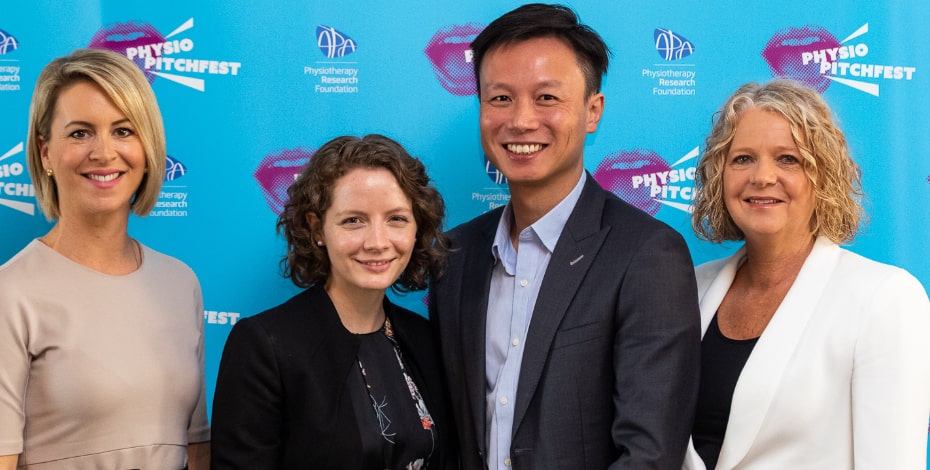
Time is running out to get your applications in for the Physiotherapy Research Foundation Physio Pitchfest, to be held at the APA conference this October. To whet your appetite, InMotion speaks with Leo Ng, who won the People’s Choice Award at the inaugural event in 2019.


Research is all about the long game, says Dr Leo Ng, a senior lecturer at Curtin University and researcher with an eye on using digital technology to improve learning.

 Multidisciplinary, exercise-based oncology rehabilitation programs
INMOTION 01 Apr, 2022

Multidisciplinary, exercise-based oncology rehabilitation programs


This systematic review found that multidisciplinary, exercise-based oncology rehabilitation programs improve some patient-level outcomes compared with usual care. Q&A with Amy Dennett.


Your recent systematic review sought to estimate the effects of multidisciplinary, exercise-based, group oncology rehabilitation programs. Are they a widely used approach?


This approach, similar to cardiac or pulmonary rehabilitation, is the most common way of delivering exercise rehabilitation to people with cancer.