
A new standard in musculoskeletal training
PD PROFILE A revamped suite of musculoskeletal courses has been built by expert clinician-educators to sharpen clinical reasoning and hands-on skills. Adnan Asger Ali and Emeritus Professor Gwen Jull share what the new courses will offer physiotherapists. PD PROFILE A revamped suite of musculoskeletal courses has been built by expert clinician-educators to sharpen clinical reasoning and hands-on skills. Adnan Asger Ali and Emeritus Professor Gwen Jull share what the new courses will offer physiotherapists.
The Spinal Steering Committee of the Musculoskeletal national group, in collaboration with the APA, has redeveloped its suite of professional development courses to align musculoskeletal physiotherapy training with international best practice.
The refreshed offering spans the cervical and lumbar spines, a new dedicated thoracic spine course and new upper and lower extremity courses, each written by expert clinician-educators and delivered through a blended-learning model.
These courses are designed for physiotherapists who are keen to expand and build sharper clinical reasoning and more confident hands-on skills, while also marking a key step on the Career Pathway toward Milestone 3 Titling and membership of the Australian College of Physiotherapists.
At the time of writing, the Level 2 courses were in final preparation.
What can members expect to gain by attending these courses?
The courses focus on clinical reasoning.
Each course works through the assessment and management of common musculoskeletal presentations, integrating and applying theory to practice.
Education, manual therapy and exercise therapy skills are taught as part of that reasoning process, so participants can learn, refine and adapt these skills to their practice.
The aim is more confident, individualised, evidence-based patient care.
How do these courses balance theoretical versus practical learning?
Foundational theory is now delivered online, direct from the specialist physiotherapists and experts who wrote it, so participants can work through foundational knowledge at their own pace before ever stepping into the room.
That online prerequisite frees up face-to-face time for hands-on practice.
The one- or two-day practical workshops are now dedicated to refining manual therapy and therapeutic exercise techniques and applying multimodal management strategies.
Case studies are used to stress-test participants’ clinical reasoning in real time, allowing them to learn under guidance from experienced tutors.
Do these courses cover the latest research in the field?
Yes, each course integrates current and foundational evidence alongside professional expertise and patient values, the three pillars of evidence-based practice.
Lectures and practical sessions draw on both research-informed practice and practice-informed research, showing participants not just what the evidence says but how it shapes clinical decisions.
Clinical care is framed within the biopsychosocial model throughout, so reasoning always accounts for a patient’s values, emotions, work and lifestyle alongside the biological reactions to injury and disease.
How will these courses differ from previous musculoskeletal courses?
This represents years of work by the Musculoskeletal national group and Spinal Steering Committee.
The previous Level 1A/B courses have been retired and replaced with a more comprehensive offering that better reflects contemporary practice.
The scope has also expanded significantly: alongside updated cervical and lumbar spine content, there’s now a dedicated thoracic spine course plus new upper and lower extremity courses, closing gaps in the previous curriculum.
Combined with the shift to blended learning, the result is a pathway that’s more coherent, from first principles through to advanced skills, and that stacks up against international standards in musculoskeletal physiotherapy education.
‘Musculoskeletal Physiotherapy Cervical Spine Level 1’ will run on 21–22 November in Eight Mile Plains, Queensland. Visit the website to learn more.

Adnan Asger Ali MACP is an APA Titled Musculoskeletal Physiotherapist and an APA Titled Pain Physiotherapist. He has served as national chair of the APA’s Musculoskeletal national group since 2023.
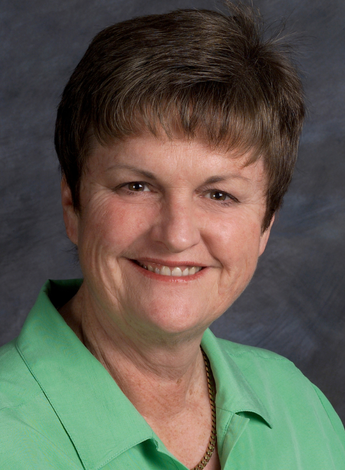
Emeritus Professor Gwen Jull FACP is a Specialist Musculoskeletal Physiotherapist (as awarded by the Australian College of Physiotherapists in 1987). She has chaired the Spinal Steering Committee during the development of this suite of MSK courses.
© Copyright 2026 by Australian Physiotherapy Association. All rights reserved.