
Graduate readiness in the age of generative AI
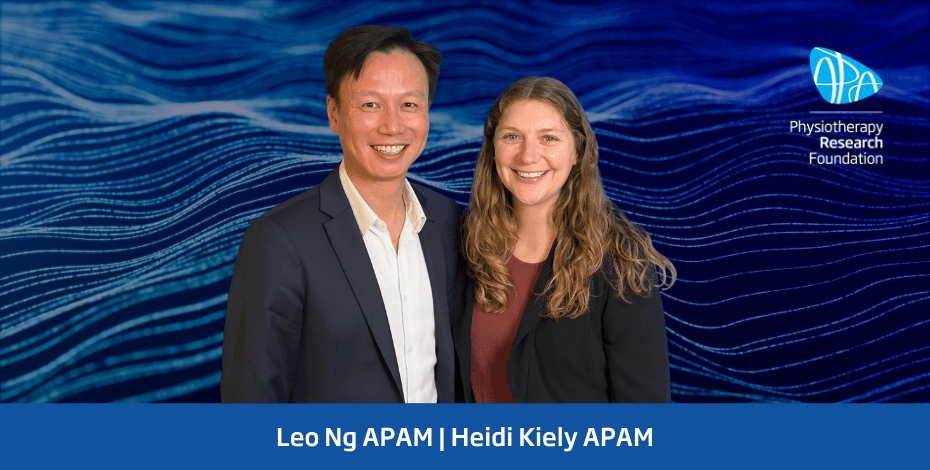
How can we ensure graduate readiness when generative AI has become so prevalent in education? In this episode, Heidi Kiely and Leo Ng discuss how to mitigate the risks posed by Generative Artificial Intelligence (GenAI). By transitioning from vulnerable written assignments to authentic performance-based assessments, programs can ensure student readiness by integrating GenAI as a developmental tool rather than allowing influence on high-stakes assessments.
Watch the full podcast episode on YouTube.
Leo
Hi, I'm Leo, I'm here with Heidi from the University of Tasmania to talk a little bit about AI and assessment in physiotherapy. How easy is it for physiotherapy students to use generative AI such as ChatGPT on their assessments?
Heidi
So I guess it depends on the nature of the assessment. But assessments such as written essays or pre-recorded videos, things like that, it's actually quite easy because it's unfortunate we don't really have the tools to weed out when GenAI is being used versus student output. So this really calls into question the students’ true personal learning and whether they're actually doing the work.
Leo
Do you think in the last two years, well, since generative AI has come up, that many students are choosing this, using tools like ChatGPT for their assignments?
Heidi
Yeah, I do. And, you know, honestly, can't blame them if it's available and you can't find out. I shouldn't say I can't blame them. Of course I would prefer that they weren't using it and doing it in genuine way. But if they are not finding value in the assignment and able to do it from a pretty productive and efficient means using ChatGPT and not get penalised for it. You know, the problem is then on the assessment and the educators for not finding a better alternative.
Leo
I've been thinking about this as well. And do you think that physiotherapy is safer than other professions? Because in physiotherapy we've got practical exams and other forms of assessment as compared to our friends in accounting, whereas a lot more assignment in tech space. How do you feel like physiotherapy compares to other profession?
Heidi
Yeah, absolutely. I think we are very fortunate. One of the luckiest, you know, degrees and professions there is because what we do is hands on with people. We're talking out loud, doing everything directly. So if we just turn the actual career into assessments, just like the APP and clinical practice, make it an oral clinical reasoning viva, or a direct, skills-based demonstration, that secures the assessment against AI, GenAI interference. But it's also exactly what we need to be assessing our students to do. At the University of Tasmania, actually, that's exactly what we have done. We've shifted all of our core unit assessments from things like written essays into just three core exams in all of our core units. Handwritten assessments, midterm and end-semester examinations oral clinical reasoning viva and a practical examination.
Leo
If I'm a new unit convenor or unit coordinator, what other tips do you have for me?
Heidi
Yeah, that's a really great question. I think the biggest thing is, first of all, think about are we assessing what we want to assess. You know, go back to, of course, your intended learning outcomes, your ILOs. If you don't have the ability to change them, make sure your assessments are actually assessing what we want. But at the same time, we not only need to think about the core principles of the profession and what we want to assess, we also need to think about preparing our students for the real world and the real world today, not the future, but today is a world with AI.
So we need to be thinking about how can we use AI and embed it in our curriculums, whether that's as assessments for and as learning. Just so students are building capability with AI. I think that's where it's really important that unit coordinators are getting creative and thinking about ways to implement AI so that students do know how to use it.
And we're not saying, ‘oh no, we're just completely eliminating it from our curriculum altogether.’ We just don't want students to be able to obtain their degree from using GenAI to do everything for them. But we do still want them to build capability with using it because they're going to need to, we know they're going to use it when they go out in clinic and then their career.
Leo
Great answer, because thinking about a variety of different assessments, I think it's very important. But for a lot of academics because, well, ‘I have a PhD in low back pain, I only know what I went through in university, which is a lot of prac exams, written exams, assignments and things like that.’ Can you give me other ideas of assessments that we can provide students so that we can have a variety, not just looking at one or two, because every assessment type I think has pros and cons.
And so having a variety is a good thing. But there are people out there that may not have a lot of ideas. Do you have any suggestions?
Heidi
Yeah, so some ideas of using AI in university are things like having AI generate a treatment plan, and then students critique or praise it, or even having students put into ChatGPT or whatever it may be, ideas about clinical reasoning, having ChatGPT
give them ideas back, and then students interpreting it and seeing did it actually answer correctly? Would I have answered it in that way? And another tool that I really like how students actually taught me they're using it. They're using it as like a virtual study buddy. They're putting in things and asking ChatGPT to quiz them. And it's pretty intuitive and pretty innovative that the students figured this out. But it's being done everywhere, and I think it's a really awesome tool, honestly.
Leo
Can you give me some ideas of different forms of assessments?
Heidi
Yeah, so apart from the three core assessments we're doing in those core units, we're still doing a tonne of other assessments as well, whether that's for learning or as learning or actually true of learning really depends on which unit we're doing. And so of course, in our research unit, we're still having students do a full research paper and just teaching them about the ethical implications of using GenAI to do this. We're having them do reflections and an e-portfolio that tracks throughout the entire program. So true programmatic assessment to guide how they reflected on their clinical placements as well as their assessments, and see this change throughout their entire physiotherapy degree and, really, career. I think that's super beneficial as well.
And then apart from that, just using different creative means, oral presentations, talking with the students, saying what types of assessments would work best from them in a learning environment, and incorporating these in our in-person, day-to-day workshops and classes.
Leo
I think it's really important to have a variety of assessments. We've got a diverse range of students. Some do better in practical exams. They love it. Some like myself, they don't. Some like assignments and having a diverse range will actually suit the diverse range of physio students that we have. So it's a really good idea, I think, to have different forms of assessment and I think I'm hearing from other universities some assessments like using podcasts and creating videos, creating a TikTok video, which is limited. It's fun for students as well. And you know, they graduate and can help marketing for their new practice. So having these skills, I think, are really important.
Heidi
Yeah. Exactly right. You know, we teach person-centred care and inclusion as physiotherapists. I think we need to do the same for our students and be student centred and adapt to their needs as well.
Leo
And it's also interesting that we're in a stage of early AI. But also it was, this started at the end of Covid. In which case for some universities they have actually taken out written assessment altogether. But you're talking about invigilated tests and things like that, which is great. How do you think for a lot of the assessments like written, practical, workload for marking is always a consideration for different universities with a different variety of assessments. How's your university dealing with the workload?
Heidi
Yeah, that's a very fair point. And to your point, yeah, we've gone back to the future a little bit, going back to the written assignments. You know, in a post-Covid world that seems very archaic, probably, but we found a lot of benefits from it. And from a workload standpoint, it's actually gone in the opposite direction where we've gotten a ton of time back. So the amount of time that went into marking these, like, eight-, ten-page written essays was really hard. And especially if you're trying to weed out and determine if people were using GenAI, if there are academic integrity breaches.
But now we are doing most things live and able to mark in the moment, you know, the oral clinical reasoning vivas, the practical exams, those are happening right then and there. There's really minimal follow-up and time devoted to marking on the back end. And same thing with the written test. I personally have found them quite enjoyable to read, to really see the students applying their knowledge. And of course multiple choice gets marked pretty quickly as well. So we haven't seen it add really a burden at all in terms of workload and time management, but really quite the opposite. We've gotten some time back, which has been really nice.
Leo
Sounds like you've got a variety of assessment already. I love hearing about student feedback. What do they think about your programmatic assessment, portfolio, prac exams. Which one do they like most? Least?
Heidi
Student feedback has actually been overwhelmingly positive. They have loved the change. They are happy to see away with all these written essays. They feel that they now actually have time to study the content that matters to them and apply it and actually feel prepared for clinical placement. They don't feel like they're spending all of their time writing a really long essay on one or two small topics that we're asking them to write on. And then they were worried maybe some of their friends or colleagues were using GenAI and would get a better grade than them. And it definitely was a bit of an ethical dilemma, I think, and now they feel they're held accountable and it's a lot more equitable across the board. They've said things like, ‘I actually got assessed on what really matters’ and yeah, overwhelmingly positive, which has been really refreshing and nice.
In terms of which one they like the least, honestly, probably the written exam because they haven't had to handwrite things in a while. And there you see them, like during the test, shaking their hand out, getting writing cramps and, like, talking about how long it's been since they wrote with a pencil, things like that. But they love the viva, which I was surprised about. I thought they would be the most nervous for that. But they just felt it seemed the most natural and realistic, and then when they had to do things like that with their clinical educators didn't feel as scary.
Leo
A lot of academics are worried about students using generative AI for assessments, but do you see any benefits in generative AI for our students?
Heidi
Yeah, I do. So I think because of our assessment change to making our tasks more secure and supervised, a lot of people think that means we're anti-AI or AI-averse, but really quite the opposite. I mean, we at UTAS feel that AI has tremendous value.
And so we are teaching our students how to use it. We're teaching ethical usage and making sure they know how to navigate a world of AI. And I really do think it has a lot of exciting opportunities. So many of the talks at this conference have been about ways to use AI, whether that's in a clinical capacity, having AI do the admin, the back-end work, and that really actually allows more time for the human interaction piece of physiotherapy. And it can be used to do clinical reasoning. It's actually been shown to do a really good job at that, which is a little scary.
But I think as long as we are teaching our students these foundational skills themselves first, then once they go out on placement, I guess really not placement, but into their careers and then use these skills, it'll only make them better, but they really need to develop it first themselves before they can use it to become more efficient.
Leo
What else do you teach the students on the appropriate use of AI?
Heidi
Yeah, that's a really big one. I think the biggest thing is the ethical and legal implications. You know, our major hospital in Tasmania does not allow AI use whatsoever. No form of patient data is allowed to be entered into an AI system. So just stress the importance of that and just how serious of an issue it is to breach that, I think, is the biggest thing we need to be teaching our students, and then just making sure they're still clinically reasoning and using their human brain when they are using these tools, and not just having them do the work for them completely when they go out and are using it, is probably second most important.
Leo
If I was a new academic, I don't know anything about AI. Where do I go find all of this information to teach our students?
Heidi
Yeah, well, that was me not long ago, a new academic and did not know much about AI myself. But fortunately, there are a lot of really great tools out there, a lot of different web pages, other universities. The University of Sydney has released some really great stuff about AI implementation in education, which I've used quite a bit. They’re the university who developed the two-lane approach, which separates assessments into Lane one, AI-resistant tasks, and lane two, AI-permitted tasks and they've got really wonderful resources. University of Tasmania, too, has developed a bunch of resources for that too, so universities are probably a great place to start if you're an academic and see what other people are doing, and then use that and go from there.
Leo
Final question: in five years, how do you think AI is going to influence physiotherapy education?
Heidi
Yeah, well, I think, Leo, actually you said this in your talk today. You know, AI is here to stay. You can promise everybody that. It is not going anywhere. We just don't know exactly which types of AI or how it will stay. And that's why it's impossible for us to stay on top of AI and continuing to evolve our assessments around these new tools. So I think we need to home in on those core practice thresholds of physiotherapy that are here to stay. Remember, it's a human profession first and foremost. But I do think AI will add and continue to add a lot of tremendous value to our profession. I don't really know how, but I think it's got a long way, and it's going to be in our profession for a long way to come.
Leo
Thank you very much, Heidi.
Heidi
Thank you so much, Leo. It's been a pleasure.
Get to know our interviewees
Heidi Kiely APAM
Heidi Kiely is an AHPRA Registered Physiotherapist and a Lecturer in the Master of Physiotherapy Program at the University of Tasmania. She brings with her a robust clinical background from the United States, holding a Doctorate in Physical Therapy from the University of Miami. Heidi values compassionate, person-cantered care and student-centred learning. Clinically, her expertise lies in Neurology, having completed a Neurologic Physical Therapy Residency and becoming a Board Certified Neurologic Clinical Specialist.
Leo Ng APAM
Leo Ng is an academic leader in physiotherapy and digital research innovation and Chair of the Conference Committee for FOCUS26. He is also Head of Discipline of Physiotherapy at Swinburne University of Technology. In addition, Leo is co-director of Research Screener, an innovative web application that uses artificial intelligence to support researchers by improving the efficiency and accuracy of abstract screening.