

Taking care to create a great practice
Delivering excellent care is only one part of running a successful physiotherapy practice. Healthia’s CARE program is helping practitioners take a broader view of what makes a high-performing clinic, bringing clinical quality, business operations and team culture together in a structured approach to continued improvement.
Treating patients, managing staff and keeping a business running can leave physiotherapists in private practice with little time to consider the bigger picture.
Yet a successful practice also needs effective systems, engaged teams and strong leadership.
That recognition prompted Healthia, a network of allied healthcare services in Australia and New Zealand, to develop its CARE (Clinical Assurance and Recognition of Excellence) program.
The program was rolled out across the Healthia network in September 2025 after two years in development.
Healthia’s Clinical Advisory Committee had identified the challenge of maintaining consistent standards as the organisation expanded and clinics developed different approaches to clinical practice and business operations.
Healthia group chief education and research officer Associate Professor Kerrie Evans FACP and clinical services director
Bevan Ellis, both physiotherapists, say the program was introduced to help clinics recognise strengths and identify where support could make a difference, rather than being another compliance exercise.
The framework assesses clinics against 48 standards across four domains: exceptional client care, operational quality, continuous improvement and great leadership.
The standards were developed to capture the elements that contribute to a successful practice, Bevan says.
This includes everything from clinical delivery and leadership to operational efficiency and workplace culture.
'We’re very confident that if you’re doing well at these things across the board, you have a great organisation that people want to work for.
'They want to deliver amazing care; they want to measure what they’re doing; they’ve got a great environment where they’re happy with the culture and happy to be at work,’ he says.
A valuable aspect of the program for practitioners, Kerrie says, is the opportunity to examine clinical practice beyond the immediate demands of patient care.
Reviewing documentation and auditing clinical notes can highlight issues that might otherwise go unnoticed in a busy clinic, she says.
Clinical notes audits done well, although time-consuming, look beyond whether documentation has been completed to consider clinical reasoning, assessment findings, treatment decisions and ongoing management.
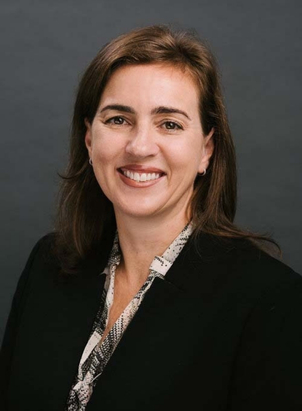
Kerrie Evans.
Kerrie says reviewing notes can prompt clinics to ask whether records accurately reflect the care provided and support sound clinical decision-making.
Kerrie, a Specialist Musculoskeletal Physiotherapist (as awarded by the Australian College of Physiotherapists in 2007) and clinic owner on the Gold Coast, has experienced the benefits of the program firsthand.
She says the process prompted her own team at Allsports Physiotherapy’s Parkwood clinic to reconsider how responsibilities were allocated and how individual strengths could be better utilised.
‘We’d previously just evolved into managing certain tasks and roles.
'But when we started the CARE process, our team said, “This has been great because now we know who to go to for help with specific things.”’
In many clinics, responsibilities develop organically, with individuals taking on clinical governance, staff development, finances
or operational matters intuitively or without those roles being formally discussed, Kerrie says.
Making responsibilities visible can improve accountability, reduce duplication and prevent important tasks from falling through the cracks.
At Kerrie’s clinic, the process helped identify opportunities to draw on individual interests and capabilities, including one partner’s enthusiasm for making care more culturally inclusive.
The experience also reinforced the fact that clinical expertise does not necessarily translate into business expertise.
Kerrie describes her clinic, which was recently acknowledged by the APA after reaching Healthia Leading Clinic status, as culturally strong but says that marketing and commercial management are less familiar territory.

Bevan Ellis.
It is a common challenge: physiotherapy training prepares practitioners to manage patients but often provides less preparation for the financial and strategic demands of running a business.
A review, such as through the CARE program, can expose those gaps while helping clinic owners recognise the capabilities of practice managers and other team members and involve them in areas where their skills might be better suited.
Another benefit, Kerrie and Bevan say, is the opportunity for clinics to access more targeted support.
Healthia’s approach combines self-evaluation with peer review.
Clinics work alongside their regional partner to develop a continuous improvement plan identifying three to five priorities likely to have the greatest impact in their individual circumstances.
This is a deliberate departure from the perception of accreditation as a process of meeting prescribed requirements.
Bevan says the emphasis has been on helping clinics understand their business and identifying practical changes that will make a difference.
‘There’s nothing alarming or shocking in there for people.
'I’ve had lots of feedback saying, “Oh, we haven’t thought about that for a long time” or sometimes at all,’ he says.
The framework rates Healthia clinics as developing, established or leading. However, achieving a particular rating is not the end point.
Clinics can continue working on individual standards and resubmit to improve their overall rating, reinforcing the fact that quality improvement is an ongoing process rather than a one-off achievement.
For independent practice owners, Kerrie says, there is an important lesson here.
Quality improvement does not necessarily require an elaborate accreditation framework, significant financial investment or a large administrative team.
It starts with being prepared to question existing processes, examine performance honestly and establish shared expectations about what good practice looks like.
Kerrie says clinics of all sizes can benefit, whether they operate with two practitioners or a much larger multidisciplinary team.
‘Having those conversations about what you consider to be high-quality care, how you measure it and who’s accountable for those items is really important, irrespective of the size of your practice.’
Clear clinical governance, regular documentation reviews, outcome monitoring, professional development and defined responsibilities are practical starting points.
Clinicians also need an environment where they can discuss challenges and reflect on their practice, Kerrie says.
Perhaps the most significant takeaway, she adds, is the importance of making time for strategic reflection.
Private practice physiotherapists are often so immersed in treating patients and managing daily business demands that longer-term planning becomes something to address when time permits, she says.
Inevitably, that time rarely arrives.
Bevan believes that even a relatively short period away from the day-to-day running of a clinic can be valuable.
‘Just coming back out and having more of a helicopter view of your business, even if it’s for an hour, is helpful because then you get to look up, look at the horizon a little bit,’ he says.
With private practices navigating workforce pressures, rising operating costs, changing patient expectations and the increasing influence of technology, including AI, that perspective is particularly important, he adds.
Regularly considering how business is performing, where it is headed and what needs to be done to change is as important as maintaining clinical currency.
Healthia’s CARE program reinforces a principle that should resonate across the profession, say Kerrie and Bevan – that excellent patient care and a well-run business are not competing priorities.
Instead, they believe that the two are closely connected and that investing in one can strengthen the other.
Whether through a formal framework or regular team conversations, taking time to evaluate what is working, to acknowledge what is not and to agree on where to improve are steps that can help practices deliver quality care and become better places for physiotherapists to work and develop.
© Copyright 2026 by Australian Physiotherapy Association. All rights reserved.