SUPER-Knee trial for ACL injuries
Researchers in Australia, the Netherlands, Denmark and the USA are investigating the effects of different exercise programs for people post-anterior cruciate ligament reconstruction.
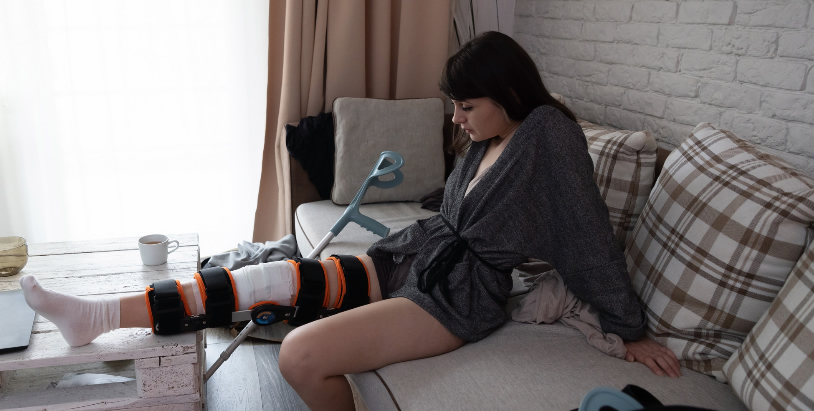
Anterior cruciate ligament injuries can be painful and debilitating, while anterior cruciate ligament reconstruction (ACLR) can also lead to loss of function and the accelerated development of osteoarthritis.
Yet there is a lack of evidence to guide physiotherapists on how to manage people post-ACLR who may be experiencing persistent knee problems but are too young for a knee replacement.
Associate Professor Adam Culvenor APAM is part of a team that undertook research to provide some of the first evidence to guide management of people with persistent knee problems following ACLR.
‘We don’t have a lot of evidence on careseeking behaviour in these people.
'They’ve often done a lot of rehab and they’re sitting at home in pain and not actually seeking care – although they need it – because they don’t understand that there are things that may help them.
'This trial enables us to show that that’s the case.’
The study, SUpervised exercise-therapy and Patient Education Rehabilitation, followed 184 participants aged 18–40 who were nine to 36 months post-ACLR and who scored <80/100 on the Knee injury and Osteoarthritis Outcome Score subscales covering pain, symptoms, function in sports/recreation and quality of life.
The intervention group received a supervised exercise program based on the best available evidence for patients with ACLR and other knee injuries, with input from patients and experienced physiotherapists.
This exercise program aimed to increase lower-limb muscle strength, endurance and power as well as functional performance and neuromuscular control and to increase understanding of knee health.
The intervention group received twice-weekly supervision with a physiotherapist for four months, then independent exercise sessions at a gym or at home for another eight months, with follow-ups at the fourand 12-month mark.
The control group received a booklet with best-practice guidance, one face-to-face session with a physiotherapist and encouragement to perform unsupervised exercise.
‘We found a between-group difference at the four-month time point, where the intervention group had got significantly better than the control group.
'However, at the 12-month time point, that difference actually decreased so they became more similar.
'This wasn’t because the effects for the intervention group reduced but because the control group kept slowly improving right up to the 12-month mark.
'It’s possible that that initial education and independent exercise encouraged confidence or behaviour change in the control group that they were able to maintain throughout the study.’
The study involved elements co-designed through consultation with patients, clinicians and orthopaedic surgeons to test the effectiveness of physiotherapist-supervised care.
Retention rates exceeded 95 per cent of participants for follow-ups and both groups felt reassured that they were not alone in experiencing knee issues and that there is help available to them.
‘This is the first trial in this patient population that really puts post-traumatic osteoarthritis in front of the eyes of GPs, orthopaedic surgeons and physios.
'We were able to publish it in a general medical journal, which we hope has a very wide medical audience to say, “Actually, this is a problem.
'These people are out there and we need to be doing more and providing these people with more help than they’re currently getting…”
'This is just the first step in starting that discussion, opening the field for people to do more research, more clinical trials, to provide more robust evidence and build the evidence base for this patient population, which has been overlooked until now.
'I hope it will engender a lot of excitement and more work in this space.’
To read the research paper, click here.
© Copyright 2026 by Australian Physiotherapy Association. All rights reserved.