Chronic health and disability

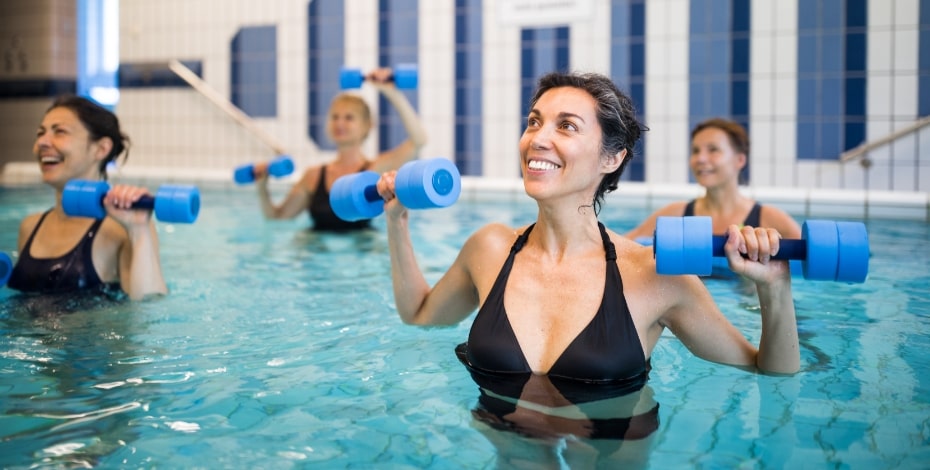
Water-based training for coronary heart disease
INMOTION 01 Dec, 2021

Water-based training for coronary heart disease


A randomised trial compared water-based circuit training to other forms of exercise for people with stable coronary heart disease. Q&A with Anna Scheer.


Your trial compared various formats for delivery of exercise therapy to people with stable coronary heart disease. At what stage after a coronary event were participants enrolled in the study?

Unlocking the mysteries of the lumbar spine and pelvis
INMOTION 01 Dec, 2021

Unlocking the mysteries of the lumbar spine and pelvis


An advanced course in lumbar spine and pelvic girdle pain disorders will help with complex presentations, explains one of the presenters, Hannah Graetz.


Who would benefit most from attending ‘The complete and advanced lumbar spine and pelvis’?


Physiotherapists with advanced skills and those regularly treating lumbar spine and pelvic girdle pain disorders will benefit most from attending.

Cost-effectiveness of exercise training for chronic obstructive pulmonary disease
INMOTION 01 Nov, 2021

Cost-effectiveness of exercise training for chronic obstructive pulmonary disease


Increasing physical activity is likely to be cost-effective in treating people with chronic obstructive pulmonary disease. Q&A with Glenn Leemans.


Your systematic review examined the cost-effectiveness of respiratory physiotherapy interventions for people with chronic obstructive pulmonary disease (COPD). Why did you decide to tackle this topic?

Advice and non-specific spinal pain
INMOTION 01 Nov, 2021

Advice and non-specific spinal pain


This systematic review looks at the effect of advice and education on pain and disability in people with non-specific spinal pain. Q&A with Caitlin Jones.


International guidelines for the management of spinal pain already endorse advice as part of first-line treatment, so what were the uncertainties that led you to do this literature review?


Despite advice being recommended internationally as a treatment for spinal pain, the evidence behind that was uncertain and out of date.

Put your best knee forward
INMOTION 01 Nov, 2021

Put your best knee forward


The online Victorian Branch End-of-Year Breakfast with Christian Barton provides new perspectives on exercise therapy for knee osteoarthritis. 


For 15 years, clinician and researcher Dr Christian Barton has focused on individual exercise solutions and holistic patient education for people with persistent pain.


His passion is to have people stay physically active, especially those with difficult-to-treat long-term injuries and knee osteoarthritis.

Grants assist with physio research projects
INMOTION 01 Oct, 2021

Grants assist with physio research projects


Since 2012, the Pat Cosh Trust has issued funding to 21 research and project grants in Victoria, totalling approximately $400,000. A discussion with the three 2021 recipients about their work.


Building toolkits for telehealth


The ongoing COVID-19 pandemic has given telehealth a big boost, but some clinicians lack confidence in using it.


Associate Professor Christian Barton received a Pat Cosh Trust Grant this year to develop a toolkit for clinicians treating osteoarthritis.

A breath of fresh air
INMOTION 01 Jul, 2021

A breath of fresh air


2020 PRF Jill Nosworthy Grant recipient Bernie Bissett discusses her research project.


In 2000, Associate Professor Bernie Bissett left university wanting to work as a musculoskeletal physiotherapist.


But in her first year at the Royal North Shore Hospital in Sydney, she worked and fell in love with intensive care (ICU) physiotherapy. ‘What I loved about it is that it’s a combination of cardiorespiratory, neuro and musculoskeletal, all in one.’

 Exercise preferences in parkinson’s disease
INMOTION 01 Apr, 2021

Exercise preferences in parkinson’s disease


This study found that people with Parkinson’s disease were more willing to participate in exercise programs that cost less, involve less travel, provide physical or psychological benefits and are supervised by qualified professionals. Q&A with Serene Paul.


Your recent study published in Journal of Physiotherapy investigated the use of exercise in people with Parkinson’s disease. Isn’t it already established that exercise is helpful in this population?