Bringing cancer care to the patient
When Benjamin Gold’s wife Nicole Iglicki was diagnosed with breast cancer just before the COVID-19 pandemic, their lives became dominated by hospitals, surgery and chemotherapy. Nicole’s having to travel to care when she was feeling low sparked an idea for Benjamin: what if cancer rehabilitation and allied healthcare could come to the patient?
It was a simple observation born from personal experience: rather than asking an already exhausted cancer patient to travel to care, what if the care could come to them?
However, for Hub and Spoke Health practice owner Benjamin Gold APAM, turning the idea of mobile cancer care into a viable new service within an existing physiotherapy private practice involved much more than just identifying a gap in care.
A need arises
After his wife’s cancer diagnosis, Benjamin was with her through the gruelling mastectomy and chemotherapy processes.
Alongside the physical demands of treatment, Nicole experienced the profound disruption that cancer can bring to everyday life, including losing her hair and spending a significant amount of time in healthcare settings.
Benjamin says exercise was an important part of how his wife managed her cancer journey.
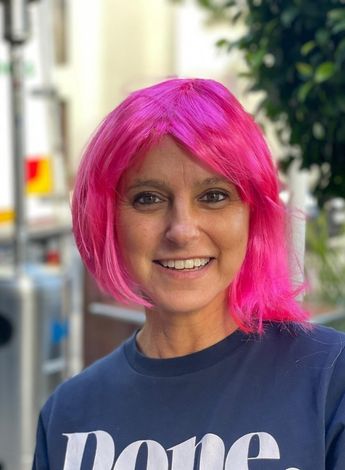
Nicole Iglicki.
Exercise is increasingly recognised as a crucial component of cancer care and rehabilitation (see InMotion feature article here).
This includes managing treatment-related effects and supporting physiological and psychological wellbeing.
Despite the benefits, there was an obvious practical problem: after spending so much time in hospitals and healthcare environments, the last thing Nicole wanted was another reason to travel to an outpatient exercise clinic.
‘She was practically living in the hospital. So it wasn’t a huge jump to think, well, what if exercise came to her?’
That question was the starting point for what would eventually become Hub and Spoke Health’s mobile cancer care service.
Rather than thinking about rehabilitation solely as something delivered within a clinic, Benjamin began wondering what it might look like if physiotherapy, exercise physiology and other services relevant to the cancer journey could be delivered in the patient’s home.
This was not the first time Benjamin had considered the advantages of bringing physiotherapy to the patient.
Years earlier, while living in New York, Nicole developed a sacroiliac joint problem during pregnancy.
The couple was living in a fourth-floor walk-up apartment and her pain and mobility limitations made getting down the stairs and into a taxi for treatment difficult.
‘I thought at the time, wouldn’t it be great if a doctor or physio came to you, especially in situations like that?’
The experience led him to begin providing home visits in New York.
It also gave him an understanding of the practical and clinical differences between treating someone in a controlled clinic environment and assessing and managing them in their own home.
When his wife later went through her cancer treatment, the two experiences came together.
Shaping a new service
The idea was not immediately turned into a business. Benjamin says it was around 18 months after his wife’s treatment had finished that they decided they wanted to ‘give back to the cancer world’.
Cancer had become something deeply personal to them but Benjamin also recognised an opportunity to address the broader issue of rehabilitation accessibility.
If exercise can help people manage some of the physical and psychological consequences of cancer and its treatment, he reasoned, then access to exercise and rehabilitation should not be limited by a patient’s ability or willingness to travel to
a clinic.
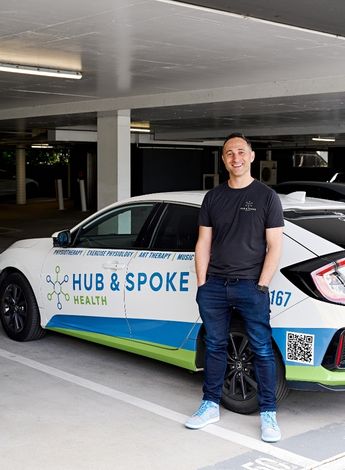
Benjamin Gold.
For someone experiencing pain, fatigue, treatment-related side effects, postoperative limitations or reduced mobility, the journey to the clinic can itself become a barrier to participating in care.
Here, Benjamin’s experience as a physiotherapist came to the fore.
His clinical background includes the Geoffrey Maitland concept of manipulative physiotherapy, Mulligan mobilisation, neurodynamic mobilisation, spinal manipulation, muscle energy techniques and Travell and Simons trigger point release.
He has worked across Australian and US private practice and he completed a doctorate of physical therapy while living in New York.
These experiences shaped the way he thinks about rehabilitation and the role of the physical environment.
Benjamin points to post-surgical rehabilitation as a straightforward example of why home-based physiotherapy can have
clinical value.
A patient recovering from surgery may struggle to get out of bed, transfer from the toilet or negotiate stairs, yet traditional clinic-based rehabilitation often involves reproducing those tasks in a controlled environment.
Functional mobility is context-dependent, Benjamin says, and observing a patient in their own environment can reveal barriers that may not emerge during a standard assessment.
A patient might mention having stairs, for example, but a home visit could reveal a long gravel driveway, uneven surfaces or other environmental factors that materially affect their ability to access the house.
‘There’s nothing like seeing the environment in the flesh or in real time rather than having it described to you.’
In cancer rehabilitation, however, Benjamin is careful to acknowledge that the home environment will not necessarily change the clinical management for every patient.
Cancer is not a single clinical presentation and treatment pathways, impairments, precautions and contraindications vary considerably.
For someone undertaking general exercise under appropriate clinical supervision and oncology protocols, the difference between home and clinic may be relatively small; for someone experiencing significant pain or dysfunction, removing the need to travel may be much more important.
Turning that clinical concept into a private practice service required Benjamin to think beyond the treatment itself.
Hub and Spoke Health approaches the development of new services through a process of establishing the clinical workforce before generating demand.
Practitioners with the appropriate skills need to be available first, after which the business – based in Balaclava, in Melbourne’s inner south-east – can begin building awareness through its website, digital advertising, its existing database and professional referrer networks.
‘It becomes a bit of a supply-and-demand issue.
'First, we need the supply of the physios or the staff, then we need to build the demand.’
Building relationships
Cancer care presents a particular challenge because the referral pool is more specialised.
Rather than marketing solely to the general public, Benjamin has been building relationships with oncologists, cancer surgeons and GPs involved in cancer care.
He has visited oncologists, contacted specialists and developed a dedicated cancer care pamphlet explaining the services available.
Benjamin’s wife features on the pamphlet, photographed with her pink hair.
It is a personal reminder of the experience that prompted the service but it also gives referrers and potential patients a tangible sense of why Benjamin is passionate about making rehabilitation more accessible.
Private practice physiotherapists considering developing a niche service need to prioritise developing referral relationships, which Benjamin believes can be one of the most important steps between having an idea and actually delivering on it.
In a multidisciplinary field such as cancer care, the service needs to sit within an existing network of oncologists, surgeons, GPs, nurses and other allied health professionals, with a clear understanding of roles, communication and referral pathways.
Getting off the ground
There is also the less glamorous but equally important question of whether the service makes business sense.
Benjamin describes mobile healthcare as ‘a logistics business with patients involved’, noting that it involves the complex coordination of clinicians, travel, appointment lengths, locations, patient preferences and demand.
There is a financial risk associated with launching a service when demand is uncertain.
Hub and Spoke Health, which is about to open a new location to house physiotherapy, massage and acupuncture under one roof, manages the risk by initially using contractors for the new service.
This means the practice can test demand without immediately taking on the fixed costs associated with employing additional clinicians. Permanent positions are considered once referral volume and service demand become more predictable.
The mobile cancer service remains very much in its infancy.
Benjamin says it is a work in progress, that the business is still building relationships with referrers and developing the workforce and operational infrastructure required to support it.
Ultimately, he hopes the service will become a routine component of the cancer journey, alongside medical treatment and other allied health interventions.
He sees a future in which physiotherapy, exercise physiology, dietetics and other appropriate services can be delivered to patients in their homes when that is clinically and practically appropriate.
‘I want this to be one of the mainstays of a patient’s journey.’
Meanwhile, Benjamin is busy testing and developing an idea that emerged from a very real gap in his family’s experience of cancer care.
© Copyright 2026 by Australian Physiotherapy Association. All rights reserved.