
Tasmania trains its own
After decades of interstate reliance, the University of Tasmania has produced 76 physiotherapy graduates as employed numbers increase 10.3 per cent. Marina Williams reports.
When the University of Tasmania (UTAS) admitted its first Master of Physiotherapy cohort in 2022, Tasmania had 574 employed physiotherapists.
By 2026, that workforce had risen to 633 – an increase of 10.3 per cent, according to APA workforce data cited by Associate Professor Rutger de Zoete APAM.
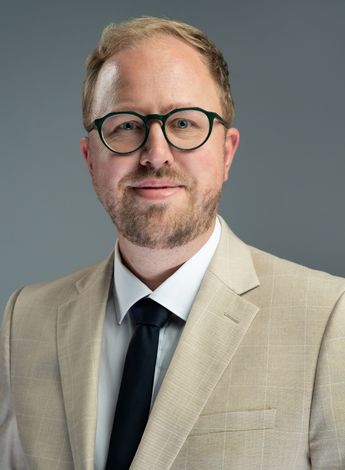
Associate Professor Rutger de Zoete
In those years, UTAS graduated 76 physiotherapists across its first three cohorts. Rutger, academic lead for physiotherapy at UTAS and president of the APA Tasmanian Branch Council, says the new graduate pipeline is contributing to that growth.
‘Tasmania has historically relied on interstate-trained physiotherapists but we are finally creating homegrown Tassie-trained physios.’
The Master of Physiotherapy, alongside new master’s degrees in occupational therapy and speech pathology, was introduced through the Allied Health Expansion Program, a collaboration between UTAS and the Tasmanian Department of Health.
The expansion was designed to increase allied health training in Tasmania, where an aging population and high rates of chronic disease were adding to demand for health services.
The state’s health profile helps explain the scale of the demand. The Australian Bureau of Statistics’ 2022 National Health Survey reported that Tasmania had a population of about 570,000 – 2.2 per cent of the national population – and a median age of 41.8 years, compared with 38.5 nationally.
More than four in five Tasmanians, 84.9 per cent, had at least one long-term health condition, while 58.4 per cent had at least one chronic condition – the highest proportion of any state or territory.
Musculoskeletal conditions were also more prevalent than nationally.
Back problems affected 20.8 per cent of Tasmanians, compared with 15.7 per cent across Australia, while 20.5 per cent reported arthritis, compared with 14.5 per cent nationally.
Those health needs have historically sat alongside a relatively small physiotherapy workforce.
Before UTAS began training physiotherapists, Tasmania had comparatively few practitioners relative to its population: the Australian Government’s 2019 fact sheet on the physiotherapy workforce recorded 80.7 physiotherapy full-time equivalents per 100,000 people in the state, compared with 107.5 nationally.
Tasmania had the lowest rate of any state and the second lowest of all jurisdictions, ahead only of the Northern Territory.
‘There’s been a mismatch between the community’s need for care, particularly in chronic disease management, and the workforce available to deliver it,’ Rutger says.
The workforce challenge was compounded by the absence of a physiotherapy training program in Tasmania. Tasmanians wanting to enter the profession had to leave the state to study, while employers relied on recruiting physiotherapists from interstate to work in Tasmania.
‘When people had to leave the state to study, we inevitably lost many along the way who settled interstate,’ Rutger says. ‘From a workforce planning perspective, that’s not sustainable.’
Geography adds another challenge, he says. Under the Modified Monash Model, Tasmania has no MM1 metropolitan area. The state is classified MM2 and above, with large areas MM3 or higher.
‘It introduces challenges around healthcare access and service utilisation.’
The physiotherapy program was designed with that workforce context in mind – recruiting Tasmanians, training students across the state and preparing graduates for regional practice.
Tasmania is unusual in having one university and one physiotherapy program serving the entire state. Sixty per cent of places are reserved for Tasmanian students.
‘We have a 60 per cent quota of students in our program being from Tasmania, so that we directly contribute to the Tassie workforce,’ Rutger says.
In practice, he says, the proportion has been considerably higher, with only a few interstate and international students.
The program’s main teaching hub is in Launceston, with an intake of 30 to 35 students each year and practical training delivered face to face.
Students learn alongside occupational therapy and speech pathology students in shared units before completing physiotherapy-specific training. Clinical placements extend around the state.
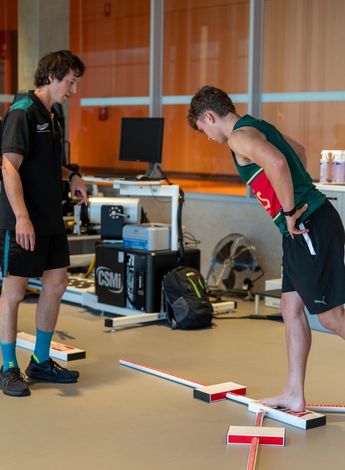
Where possible, UTAS maps placements against where students live, so students in the south, north or northwest can undertake some of their clinical education closer to home.
While UTAS does not systematically track graduate destinations, Rutger says most of the first three cohorts are known to be working in Tasmania. Demand is evident well before graduation.
‘All of our students have a job lined up before they graduate,’ Rutger says.
Many secure employment about halfway through the two-year program. Rutger says the 10.3 per cent is a net workforce increase, reflecting retirements and physiotherapists moving into and out of Tasmania as well as graduates entering practice.
‘Despite natural retirements and workforce attrition, the net growth is real.’ Even so, he says the program’s contribution is now visible in the workforce data.
‘It means that Tasmanians can now access care in communities where they historically couldn’t.’
Graduates have taken jobs in the Tasmanian Health Service across the south, north and north-west, including in the major hospitals, as well as in private practice.
Rutger says private practice can have a particularly visible impact in smaller communities, pointing to graduates returning to areas where physiotherapy access has been limited.
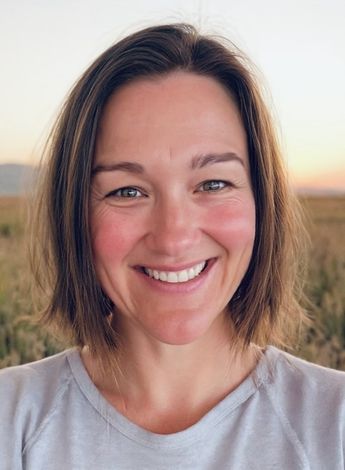
Helen Lambourne
A year after graduating, Helen Lambourne APAM is already showing what that workforce change can mean in a smaller community. In September 2025, she opened Cygnet Physiotherapy in the Huon Valley.
Helen describes her path to physiotherapy as ‘definitely not a traditional one’. She studied exercise science 25 years ago and initially worked as an exercise scientist before studying psychology and completing a Master of Commerce.
Fifteen years in corporate roles followed, giving her confidence about the financial and business side of later establishing her own practice.
After moving to Tasmania 10 years ago, Helen continued in her corporate career, working remotely. Five years later, however, she realised she had become disconnected from the community around her.
‘I reflected on what I wanted to do and my motivation for moving to Tassie was to build a community, be part of a community,’ she says.
Helen returned to what she calls her ‘roots of exercise science’, retrained as a Pilates instructor and established a home studio.
Her first Pilates client had a frozen shoulder.
‘I knew I could help but I didn’t know what I could actually do,’ she says. Within a week or two, she heard that UTAS was introducing its new allied health programs.
Tasmania has historically relied on interstate-trained physiotherapists but we are finally creating homegrown Tassie-trained physios.
Associate Professor Rutger de Zoete
Because her exercise science degree was 25 years old, Helen completed six prerequisite subjects remotely through Charles Darwin University before gaining a place at UTAS.
‘I wanted to be part of my community. I wanted to give. So that all led to physiotherapy.’
Helen had also been accepted into physiotherapy programs interstate. With a then-five-year-old son, moving interstate for two years would have been difficult.
Studying at UTAS meant she could remain in Tasmania and later practise in a community where she already had connections.
'I’m in this community. I’m not being recruited into this community,’ she says. At graduation, Helen made the connection between training and staying in Tasmania in her valedictory address.
‘I promise to pay it forward to my rural Tassie community. And here I am, a proud UTAS graduate. While some mainlanders are heading home, most of us are staying. The Allied Health Expansion Program is working and we are it.’
Helen is the only physiotherapist based in Cygnet.
She works within a shared health practice and has developed links with the nearby GP practice, which provides many of her referrals.
Her interests include healthy aging, strength, persistent pain and helping older people remain active and independent. However, regional practice has also required her to work across a much broader case load. ‘You never quite know what is going to walk through the door.
While a lot of my work is musculoskeletal, I also see people with neurological conditions, cardiac and respiratory considerations, postoperative rehabilitation, balance and falls issues, persistent pain and multiple health conditions, all interacting at once.
It highlights the breadth of physiotherapy and the need to be a good generalist in a regional community.’
Helen’s work extends beyond individual consultations.
For example, she has brought new use to a basic community exercise room in Cygnet.
The besser-block space, with a few free weights and a squat rack, had been there for years and attracted little use. Locals loosely call it ‘the gym’.
Helen began running strength classes there and says participation has grown from three regular users to about 50 people a week in a town of roughly 2000.
The increased use has led to further council investment, including plans for swipecard access outside class times.
‘It’s a phenomenal ripple effect,’ Helen says.
‘From one lonely person saying, “I want to connect with my community” to running five strength classes and people asking for more.’
That breadth of practice reflects the regional workforce Rutger says the program needs to prepare graduates for.
‘Some of these graduates will be the only health professional in a region and so the rural generalist is very important,’ Rutger says.
‘We want them to be prepared for a fulfilling, long-term career in these regions, contributing to the workforce.’ In regional work, professional networks and mentoring are particularly important.
‘It can get a little lonely when you’re the only physio in town, so having those connections is super, super important,’ Helen says. As a new graduate, she spent one day a week working remotely with a Brisbane clinic to gain mentoring and contact with other physiotherapists.
Helen remains connected with her UTAS cohort through a WhatsApp group and contributes to the university’s curriculum committee.
Rutger says both the APA and UTAS have roles in supporting physiotherapists once they enter the workforce. ‘The APA is all about fostering connections and facilitating PD,’ he says.
‘But UTAS shares that responsibility, supporting ongoing clinical education and mentoring for our placement supervisors.’ With the first three cohorts now in the workforce, Rutger says UTAS is focused on keeping the program sustainable and refining its teaching, placements and clinical education rather than substantially increasing student numbers.
‘Now that the program is established, our priority is refining quality.’
As the graduate workforce develops, Rutger expects some of those physiotherapists to become clinical educators themselves, helping train the students who follow.
‘Graduates enter practice, become clinical educators for the cohorts behind them and stay connected to strengthen the profession across Tasmania. It creates an ongoing cycle.’
© Copyright 2026 by Australian Physiotherapy Association. All rights reserved.