

Life span care: when children with disabilities grow up
Becoming an adult is an important milestone for anyone but for people living with disabilities, the process can be far more complicated. Physiotherapy plays a role in managing the transition to adult life and adult healthcare services.
For children with childhood-onset disabilities such as cerebral palsy (CP), healthcare is typically accessed through a children’s hospital, where they can see all their healthcare providers in one place and a multidisciplinary team coordinates their care.
Specialist schools may provide physiotherapy and other services or children may attend a private clinic with paediatric expertise for multidisciplinary care.
Once a child reaches the age of 18, however, everything changes.
The move from paediatric to adult healthcare happens on top of the transitions that every adolescent goes through—finishing high school, starting university or TAFE courses, entering the workforce and learning to be an independent adult.
This may involve finding new medical specialists and physiotherapists and a greater reliance on their GP.
The transition may be facilitated by a transition coordinator.
This transition has been described as ‘falling off a cliff’.

Professor Prue Morgan says the transition to adult services can be difficult for young adults living with disability.
‘They come from this very comprehensive, integrated paediatric healthcare system where they’ve had access to a lot of highly experienced health professionals,’ says Professor Prue Morgan FACP, Specialist Neurological Physiotherapist (as awarded by the Australian College of Physiotherapists in 2008).
‘When they have to exit that paediatric system, many of them say that they struggle to connect with health services, to negotiate and navigate and find out what they need and who to go to.’
Prue was until recently a chief investigator at CP-Achieve, an NHMRC-funded Centre of Research Excellence focused on helping adolescents and young adults with CP live full, healthy lives.
While the program ended in mid-2025, the research she and her team started is continuing at Murdoch Children’s Research Institute, Monash University and elsewhere (see breakout below).
It’s not just the person living with disabilities who feels the strain of moving from the paediatric system to the adult world.
Their families often struggle too.
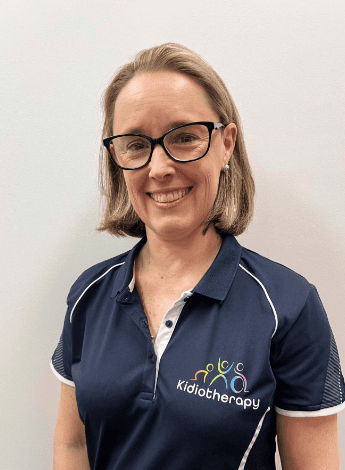
Physiotherapist Renee Bowran now offers her teen clients the opportunity to stay with her for two years after finishing school.
Renee Bowran APAM is the founder and principal of paediatric physiotherapy clinic Kidiotherapy in Sydney, which has a focus on treating children with disabilities.
A number of years ago, when Renee could see that transitioning periods were causing stress to both her clients and their families, she implemented a survey.
The results indicated that families would be more comfortable to continue with her service for one to two years after finishing school to assist in reducing the amount of change they were experiencing during this transition period.
Renee now gives her clients the opportunity to stay with her for up to two years after school finishes and reports that it has worked very well.
A similar approach is taken by Victorian neurological physiotherapy group Klint, which has a Youth Transition Program for young adults aged 16 onwards with complex and significant disabilities.
Physiotherapist Dr Shona Bischof says she was inspired to set up the program after seeing young adults with neuro disabilities lose ground once they stopped paediatric physiotherapy.
‘A lot of my adult neurological clients had preventable changes in their mobility and preventable decline in their speech function, for example, and I didn’t understand why.
‘It was that jump from paediatric into adult services—things were falling away, they were getting left behind and their skills were declining as a result.’
In some states, specific hospital-based services help young adults with disabilities manage the transition. In other states, services to assist transition may be less formalised but resources and support are provided through a variety of avenues.

Georgia McKenzie says it can take time to find suitable services for young adult clients.
Physiotherapists Georgia McKenzie APAM and Carlee Holmes both work at St Vincent’s Hospital in Melbourne, in the St Vincent’s Young Adult Complex Disability Services.
Both Georgia and Carlee were also involved in CP-Achieve with Prue, as a PhD student and postdoctoral research fellow respectively.
‘The aim is to link them with the services they need.
‘Once they’ve got the right supports in place and have an understanding of ongoing management, that’s when they discharge from us,’ Georgia says.
This can be a long process for some.
‘People with very complex disabilities might take a decade or more,’ says Carlee.
Transition starts early
Disability physiotherapists say it pays to start thinking about transition to adult care early in adolescence.
Most transition services start at 16, giving young adults with disabilities time to adjust before taking over the management of their own healthcare and NDIS plan at 18.
‘Our program commences from 16 years old but we work closely with our paediatric service to start the conversations with families at the 14-year mark,’ says Shona.
Transition is not just finding new providers for physiotherapy, occupational therapy and other care.
Part of the process is teaching the young adults to take control of their own care, which includes everything from setting short- and long-term goals for themselves—such as joining a sports team or going on to further study—to learning how to manage appointments and advocate for themselves.
Klint has developed a ‘transition passport’ that contains medical history, communication needs and other information that a young adult might need when seeking medical care or onboarding new support workers.
Adolescence and adulthood continue to bring physical challenges to a person living with disabilities.
For some, their disabilities may worsen as they get older, as the underlying condition progresses, while for others the impact on their body increases as they get older and bigger, so they may lose strength and their posture might change.

Jess Kuek, a disability physiotherapist in regional Victoria/NSW, says that care requirements change during adolescence.
‘Adolescence can be a big time for people living with disability.
‘Their bones grow, their muscles may not keep up and may get tight, and they can get contractures and postural deformities,’ says Jess Kuek APAM (below), a physiotherapist based in Albury, on the border of Victoria and New South Wales.
‘As they grow, they need bigger wheelchairs, different supports to support posture and function, better pressure care if they change position or move less and have more fixed postures and bony prominences.’
Care requirements also change as a person with disability moves into adolescence and beyond— it gets harder for parents to lift them and they may need transfer aids to enable safe transfers.
‘Families can lift younger children more easily but in the adult years it’s more difficult.
‘Accessing a swimming pool might not be feasible or physically safe for a parent carrying them; they might need staff support or specific equipment like a hoist,’ Jess says.
‘The parents are older too and their bodies are often getting worn out, particularly if there are high physical demands.’
Renee says her patients are often quite worried about transitioning to adult care.
‘I spoke to one boy yesterday and you could see the relief when I told him about the extended care I offer teens.’
Alternatively, some adolescents and families are excited to be entering a new phase of life and looking forward to taking more agency over their physical activity and healthcare.
The role of the disability physio for adults
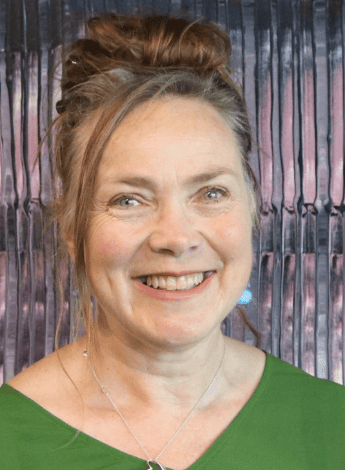
Carlee Holmes says that physiotherapists working with adults with complex and severe disability need to understand the effects of the disability on the whole body.
A physiotherapist treating children with disabilities might focus, for example, on helping their clients develop and improve their mobility and gait.
A physiotherapist working with adult clients with disabilities often has a completely different focus— maintaining mobility and function for as long as possible and assisting clients to achieve their goals.
Carlee says that physiotherapists working with clients with severe and complex disabilities need to understand how the disabilities affect their whole bodies, not just their musculoskeletal systems.
‘Their respiratory system, cardio-metabolic system, swallowing, vision, bowels and constipation are all impacted by posture.
A good understanding of the prevalence of mental health disorders like anxiety and depression is also very important,’ Carlee says.
Georgia and Carlee also help their clients develop a plan for ongoing physical activity.
‘We are trying to get them into lifelong activities that they can sustain and then monitoring for things like postural changes, gait and mobility changes, and the cardio-metabolic conditions they’re at higher risk for,’ Georgia says.
The barriers and challenges
For many young adults, the biggest challenge in shifting to adult care is finding the right providers and services to meet their needs.

Shona Bischof has set up a transition program at Melbourne-based neuro physiotherapy clinic Klint to help young adult clients navigate the adult health care system.
Shona says convenience and location are key issues, along with parental preparedness for transition.
‘I don’t think there’s anything that’s more convenient than the way school delivers therapies,’ she says.
‘There are some day programs that offer a range of therapies underneath the same roof and that’s fantastic but it’s not everywhere and it also may not be the right fit.’
Another challenge is finding the right physiotherapist—one who understands the needs of the client and their specific presentation of their disability.
Communication is key and health professionals working with adults with disabilities need to recognise that the client often has the most knowledge about their disability and what they need from doctors and therapists.
Prue says there is a growing need for physiotherapists who understand how disabilities like CP present in adults and what can be done to improve mobility, function and quality of life.
Many physiotherapists with experience in disability focus on paediatrics but since the introduction of the NDIS in 2013, more adults with childhood-onset disabilities are seeking physiotherapy than ever before.
‘A lot of physios are saying, I don’t know how to help you because I’m not familiar with your disability or I don’t understand about ageing with a disability,’ she says.
‘Disability doesn’t stop when you turn 18.’
As young people with disabilities enter their 20s and 30s, they can develop new medical conditions including comorbidities and accelerated or premature ageing.
‘They’re going to a physio saying I need help because I can’t walk as far as I used to or I’ve got more pain in my hips or my balance seems to be getting worse,’ says Prue.
‘If the physio doesn’t understand premature ageing, which is very common in people with a lifelong disability, they’ll struggle to rapidly get their own knowledge up while concurrently trying to help this young person understand their health and what might be happening.’
All of these issues tend to be amplified in rural and remote areas.
While some rural clients are able to access transition programs, they are often located at hospitals based in metropolitan areas.
Clients may have to travel long distances and potentially find disability-friendly accommodation.
The NDIS factor
Underpinning disability care in Australia is the NDIS, which provides funding for children and adults.
Despite its challenges, there is no doubt that it has changed the lives of Australians with disabilities for the better.
‘For all the challenges at the moment, you can’t deny that people with lifelong disabilities have now got more access than they had before.
‘For every time I read about unfair decision-making or poor management, I am aware of someone who has had the opportunity to start aquatic therapy as a 50-year-old and it has transformed their life,’ says Prue.
Some of the proposed changes do have both physiotherapists and users worried, however.
Changes to travel allowances for physiotherapists in regional areas are a concern and delays in accessing funding can really impact a client’s care.
Read about how two young adults with cerebral palsy have experienced the transition from paediatric to adult services and care, clink the links below:
CP-Achieve and the CP-Pathfinding project
CP-Achieve was funded by the NHMRC as a Centre of Research Excellence from 2020 to 2025, with a focus on helping young adults with cerebral palsy (CP) live full and healthy lives.
The project team included young people with CP and their families, alongside clinicians, researchers and students.
‘One of the innovations of CP-Achieve was that in every research project we had co-researchers with lived experience, either young people with CP themselves or parents of young people with CP,’ says Professor Prue Morgan, who was one of the chief investigators at the centre.
Dr Stacey Cleary MACP, along with Prue, Georgia McKenzie and other researchers from CP-Achieve, is working on a series of modules for young adults with CP covering topics of young adult life including navigating healthcare, education, employment, relationships, home life and community participation.
The first module—CP-Pathfinding: Fitness for Life— has been launched by the team.
Co-designed by young adults living with CP, their carers and family members and allied health professionals in addition to the research team, it contains information, resources and tips to support young adults living with CP in being physically active, both at home and in the community.
A second module focusing on health is also about to launch.
>> Visit cerebralpalsypathfinding.org and cp-achieve.org.au for more information.
>> This project has been supported by the Physiotherapy Research Foundation through a Seeding Grant awarded in 2023 to Stacey Cleary.
© Copyright 2026 by Australian Physiotherapy Association. All rights reserved.