Training clinic transforms rural care
A partnership-driven teaching clinic is transforming access to primary care physiotherapy in Victoria’s Goulburn Valley while creating a sustainable pipeline of rural clinicians. By embedding students within a community health service and pairing supervision with collaborative funding, the clinic shows workforce shortages can become an opportunity to innovate.
For many rural communities in Australia, access to publicly funded physiotherapy has become increasingly difficult.
Workforce shortages, growing demand for musculoskeletal and chronic disease management and limited capacity to host
student placements have created a perfect storm of need.
Too few clinicians means longer waiting lists and too few placements means fewer graduates choosing rural practice.
In Victoria’s Goulburn Valley, that cycle is beginning to change.
An innovative new clinic based in Shepparton, the Rural Physiotherapy Teaching Clinic, has been established through a partnership between La Trobe Rural Health School, the University of Melbourne’s Going Rural Health program, community health service Primary Care Connect and a private practice, Goulburn Physiotherapy.
The clinic is supported by the Murray Primary Health Network.
Since its inception in 2024, it has delivered hundreds of supervised consultations, reduced physiotherapy waiting times from 41 weeks to 16 weeks and created a new model for educating future physiotherapists without compromising patient care.
Rather than operating as a standalone university clinic, the service is embedded within an existing community health organisation.
Patients receive accessible, government-funded physiotherapy, while students gain authentic primary care experience alongside experienced clinicians, in person and online.
It is a model designed around community need as well as education.
Tackling the problem
For physiotherapist, lecturer and La Trobe Rural Health School clinical academic coordinator Dr Rachael McAleer MACP, the clinic began with a clear understanding of three interconnected issues facing rural healthcare.

APA Titled Research Physiotherapist Dr Ryan McGrath MACP.
‘There is a physio workforce shortage,’ says the APA Titled Research Physiotherapist.
‘On top of that there was an unmet need for primary care physiotherapy and we also found that we had limited capacity for student placements.’
Those challenges were particularly evident across Goulburn Valley and Strathbogie Shire, where publicly funded physiotherapy services were struggling to keep pace with demand.
While private practices were available, many patients living with chronic conditions, disability or financial hardship simply could not afford ongoing care.
Clinic creator, senior lecturer in physiotherapy and APA Titled Research Physiotherapist Dr Ryan McGrath MACP was aware of those challenges and had been pondering solutions from multiple perspectives.
Having previously worked as a clinician at both Primary Care Connect and Goulburn Valley Health before moving into rural health education, Ryan saw the growing gap between community need and service capacity.
‘We looked at trying to develop something novel, interesting and innovative to meet community need,’ Ryan reflects.
‘At the same time, we were asking how we could increase students’ exposure to working in primary care settings and strengthen the rural workforce.’
Instead of treating workforce, education and access as separate issues, the partnership deliberately addressed all three.
The result was a student-assisted physiotherapy service embedded within routine primary care.
‘We were thinking about how we actually get more exposure to physiotherapists working in primary care settings,’ Ryan says.
‘The really nice part is that students develop independence without feeling out of their depth.’
Supported all the way
One of the defining strengths of the Rural Physiotherapy Teaching Clinic is that it is not a university-owned facility operating in
isolation.
Instead, the clinic sits within Primary Care Connect’s multidisciplinary community health service, where physiotherapy works alongside nursing, refugee help, youth services, family services and health promotion at its Shepparton and Euroa sites.
That setting exposes students to the realities of contemporary primary care physiotherapy.
Referrals frequently involve persistent musculoskeletal pain, osteoarthritis, chronic low back pain, neurological presentations, falls prevention and complex multimorbidity, requiring students to adopt evidence-based biopsychosocial approaches to assessment and management.
Every patient entering the teaching clinic is first assessed by an experienced senior physiotherapist, Brent Davies APAM, from Goulburn Physiotherapy and Primary Care Connect.
Following comprehensive subjective and objective assessment, patients are triaged to determine whether they are appropriate for student-assisted management.
Those requiring more complex clinical expertise remain within the senior physiotherapy service, while suitable patients transition to the student clinic for ongoing rehabilitation.
That careful triage process is fundamental to maintaining both patient safety and student confidence, Rachael says.
‘All patients have their initial consult with the experienced physio… we determine if they’re appropriate for a student day.’
Far-reaching implications
Perhaps the clinic’s most innovative feature is its service delivery model.
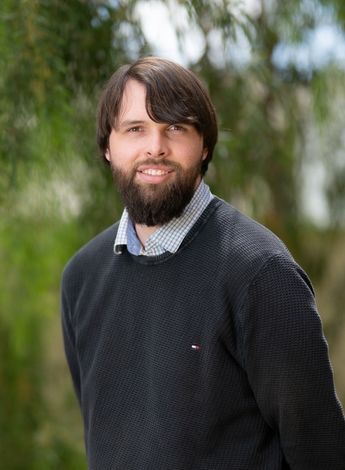
Clinic creator, senior lecturer in physiotherapy and APA Titled Research Physiotherapist Dr Ryan McGrath MACP.
Students complete five-week placement blocks, attending four days each week. Three days follow a traditional clinical education model with onsite supervision, while the fourth is a dedicated clinic day supervised remotely via Teams.
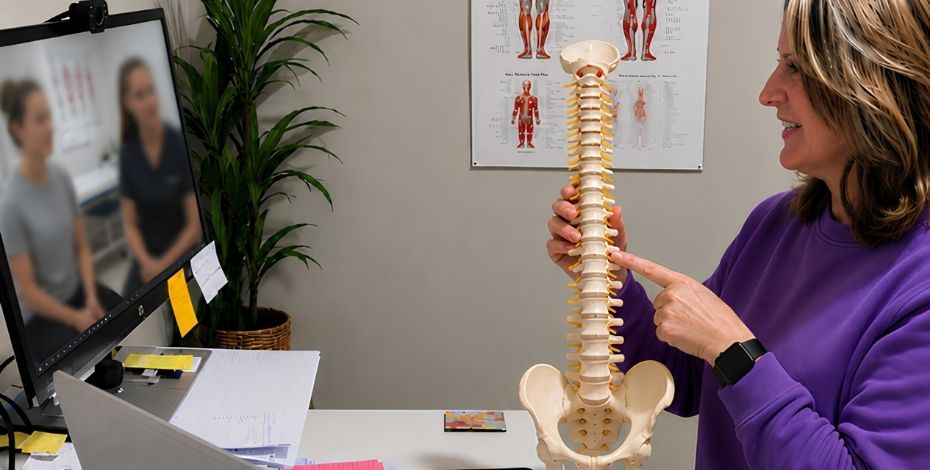
When Rachael supervises she is more than 300 kilometres away in Geelong but, she says, the technology quickly fades into the background.
Each morning begins with a structured clinical handover, during which students present their case load, discuss clinical reasoning and outline planned interventions.
During consultations, one student leads the assessment and treatment while a second student actively observes, assists and contributes to decision-making.
A mobile laptop allows Rachael to observe assessment techniques, exercise prescription and patient interactions in real time, intervening only when needed.
Patients are introduced to the supervision model before treatment begins.
Once the consultation starts, Rachael switches off her camera and microphone, allowing students to develop rapport directly with the patient.
This approach has produced an unexpected educational benefit.
‘They forget that I’m still in the room,’ she says.
‘It’s lovely to watch the students find themselves and find their own way of being a physio, rather than becoming a clone of me.’
Maximising benefits
Clinical placements are designed to develop confidence, but genuine confidence often emerges when students are trusted with increasing autonomy, Rachael says.
The student-assisted day complements, rather than replaces, traditional supervision.
Working in pairs also strengthens peer-assisted learning, Rachael says.
Rather than competing for patients, students share responsibility for clinical reasoning, documentation, exercise progression and reflective practice across a single case load.
Rachael believes this accelerates professional growth.
‘I see their confidence increase rapidly. They take on the role of real physio and not student physio very quickly.’
The clinic also strengthens students’ communication skills.
Students learn to explore diagnosis, negotiate management plans, educate patients about self-management and collaborate with other allied health professionals without relying on their supervisor to lead conversations.
The model also prepares graduates for the realities of rural practice, where independent clinical decision-making and multidisciplinary collaboration are everyday expectations.
Patients embrace care
While the clinic was designed partly as an education initiative, its greatest impact has arguably been on patients.
Before the program started, some patients were waiting close to a year for publicly funded physiotherapy.
Those delays often meant worsening pain, reduced mobility, deconditioning and declining participation in work and community life.
The addition of student-assisted appointments has significantly increased service capacity, Rachael says.
Students deliver four to five one-hour consultations each day that they are in the clinic, allowing more patients to begin rehabilitation sooner while senior physiotherapists manage more complex presentations.
And, Rachael says, patients have embraced the model.
‘The patients love it. I think they actually enjoy their part in educating the students.’
She says many patients consider themselves contributors to the next generation of physiotherapists.
Longer appointment times also allow for more comprehensive assessment, exercise prescription, behavioural change discussions and functional goal setting that can be difficult to achieve within shorter consultations.
And for patients living with chronic illness or persistent musculoskeletal conditions, continuity of care also matters.
‘If we can improve their quality of life so they can get out into the community more, I think we’ve really won.’
Workforce pipeline
Like many regional areas, the Goulburn Valley faces ongoing challenges recruiting and retaining physiotherapists.
Rachael says the teaching clinic deliberately tackles that problem by increasing students’ exposure to rural practice.
Research consistently shows that positive regional placement experiences improve graduates’ likelihood of returning to rural communities, particularly when placements are well supported and clinically rewarding (see this article for an example of this).
Rachael says the results are already emerging.
‘We’ve had two students, one metropolitan and one rural, who came through Primary Care Connect and are now working in Shepparton.’
The clinic has expanded to host 14 students annually, creating valuable placement capacity in a region where opportunities have traditionally been limited.
While student-led clinics are not new, many rely on substantial university investment and can be expensive to operate.
From the outset, the rural teaching clinic was designed around financial sustainability. Rather than creating a separate funding stream, the partnership pools clinical placement funding contributed by participating universities.
Murray Primary Health Network provides supplementary funding, allowing experienced physiotherapists and clinical educators to supervise students while maintaining service delivery.
As La Trobe Rural Health School’s discipline lead, Ryan says developing a viable business case was essential.
‘We were looking at a way we could provide services that were at least cost-effective in the context of other physiotherapy service delivery,’ he says.
The partnership also demonstrates how universities and health services can align existing funding mechanisms rather than competing for limited resources.
Rachael believes that stability is critical for continuity of the clinic. ‘A really firm funding model is extremely important,’ she says.
‘The placement funding isn’t a large amount of money but over time it does add up.’
By leveraging placement funding alongside community health investment, the clinic has created a service that benefits patients, students and providers simultaneously.
All in it together
Both Rachael and Ryan note the importance of relationships to the clinic’s success.
The clinic exists, they say, because community health providers, educators and funding bodies are willing to trust one another and develop the model collaboratively.
Ryan describes this as one of rural healthcare’s greatest strengths.
‘Rather than having to develop a model that was perfect from minute 1, we said, “Let’s try something, make sure it’s safe, learn from it, then change.”’
That willingness to adapt and grow has seen the clinic evolve continuously – from traditional onsite supervision to distance
supervision, from one university partner to two and from a placement initiative into a service with measurable health system impact.
Looking ahead, the team hopes to increase student numbers, expand placement capacity across all teaching blocks and explore opportunities to replicate the model in other rural health services.
‘Everyone has an understanding that this sort of model can really assist with our typical inequities in rural healthcare.
'It helps with staffing and it helps with clinical placements,’ Rachael says.
Students leading the way
For final-year La Trobe University physiotherapy student Mehul Chisti, the Rural Physiotherapy Teaching Clinic offers something university classrooms rarely can: the opportunity to think, communicate and make decisions like a clinician.

Final-year La Trobe University physiotherapy student Mehul Chisti.
Working in the clinic in Shepparton alongside another student, Mehul predominantly treated older adults with chronic musculoskeletal conditions, gradually taking ownership of assessment, treatment planning and patient management under the guidance of experienced physiotherapists.
‘The student-led clinic was really good,’ Mehul says. ‘It felt like we were just running the session – it was our clinic and patients were coming to see us.’
That sense of autonomy, combined with the reassurance of remote supervision, helped bridge the gap between being a student and becoming a practising physiotherapist, he says.
Mehul says the placement accelerated his confidence because students were encouraged to work through clinical problems independently before receiving feedback.
‘You’re not getting babied to become a physio,’ he says.
‘We had to make our own decisions about how we wanted to assess and treat the patients and that was really valuable.’
Knowing that his placement also contributed to reducing waiting times for publicly funded physiotherapy made the experience even more meaningful.
‘In regional areas, good physiotherapy is hard to access, so being able to make a genuine difference for those clients is fantastic.’
© Copyright 2026 by Australian Physiotherapy Association. All rights reserved.