Beyond the city limits
When Leonie Rogers graduated as a physiotherapist in the mid-1980s, she imagined spending a couple of years in remote Western Australia before returning to the city to build her career. Instead, one rural placement sparked a lifelong passion for rural practice that has taken her from the red dirt of the Pilbara to the Hunter Valley, shaping her as a clinician and cementing her belief that rural physiotherapy offers some of the profession’s greatest opportunities.
The patient had sustained a fractured femur and needed to be flown out of a small hospital in the Pilbara region in
northern Western Australia.
But before that could happen, the patient’s limb needed to be stabilised.
The doctor turned to the hospital’s young physiotherapist, Leonie Rogers APAM, and asked a simple question: how were they going to splint the leg?
Together, Leonie and the doctor searched the hospital and found an old Thomas splint.
With little more than clinical reasoning, ingenuity and determination, they improvised a traction splint that would safely support the patient on board the Royal Flying Doctor Service’s aircraft.
Looking back now, Leonie laughs at the memory.
‘I was probably 22 at the time and I didn’t think a lot about it. You just got on with it, you know.’
That willingness to simply ‘get on with it’ has become one of the defining characteristics of Leonie’s career.
Over almost four decades, she has built an extensive career across rural and regional Australia, spending 16 years in the Pilbara before settling in Muswellbrook in New South Wales’s Hunter Valley, where she has now practised for more than two decades.
Along the way, Leonie has become a passionate advocate for rural physiotherapy, believing that few areas of practice offer the same breadth of clinical experience, professional growth and connection to community.
Right placement, right time
Ironically, physiotherapy wasn’t Leonie’s first choice to study. Growing up in the Perth Hills, Leonie imagined becoming a veterinarian.
It was only after her father underwent major surgery when she was 17 that her career aspirations shifted. ‘I decided that perhaps people were more important than pets, as much as I love the pets.’
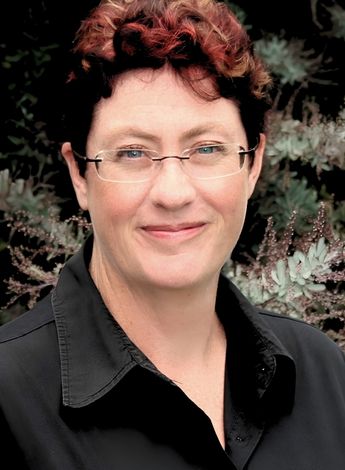
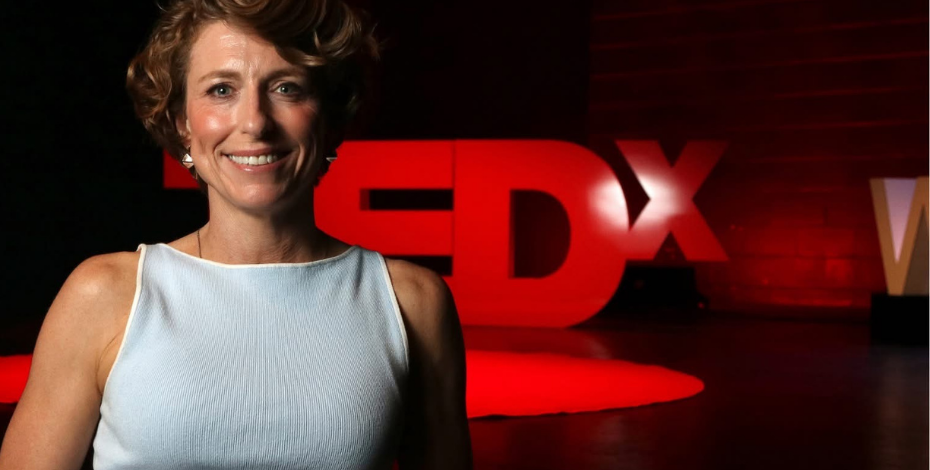
Leonie Rogers today.
After Leonie graduated from Curtin University in 1986, circumstances quickly altered the course of her physiotherapy career.
A moratorium on public hospital recruitment (‘the big teaching hospitals took one out of our entire graduating year’) meant that opportunities in metropolitan Perth were scarce, with only a handful of graduate positions available.
Fortunately, Leonie had recently completed a remote clinical placement in Tom Price and Paraburdoo in the Pilbara – an experience that had opened her eyes to a very different style of physiotherapy practice. And it changed her life.
Instead of waiting for an opportunity in the city after she graduated, Leonie accepted a position in Wickham and Roebourne in the far north-west of Western Australia.
It was, by any measure, a sink or swim experience for the new graduate physiotherapist. As the sole physiotherapist, Leonie was responsible for providing services across two small hospitals.
Her nearest physiotherapy colleagues were 50 kilometres away in Karratha.
In metropolitan practice, newly graduated physiotherapists often develop their skills within larger multidisciplinary settings where senior colleagues are only metres away. Rural practice demands something entirely different, Leonie says.
Clinical autonomy comes much earlier and with it comes responsibility.
‘You have the opportunity to do more than you possibly ever would have if you worked in a city all the time.’
That breadth of experience remains one of the strongest arguments she makes for rural practice today.
And rural communities also offer something many metropolitan practitioners never experience – a genuine sense of belonging.
In the Pilbara, Leonie met and married her husband, a miner, while they were both volunteers in the fire brigade and then the local State Emergency Service.
At that time, Leonie had taken a break from physiotherapy to work in health and safety at the local Rio Tinto iron ore mine in the Hamersley Range town of Tom Price, with a population of just 2500 people.
After starting her family, Leonie found her way back to physiotherapy. She worked as a locum at the local hospital while her two children were young, job-sharing with a senior physiotherapist who was also juggling family commitments.
Rather than specialising in a single clinical area, rural physiotherapists are often required to manage whatever presents through the clinic door.
And it was this variety as a rural generalist that drew Leonie back to physiotherapy and encouraged her to invest in her skills through professional development (PD), which she acknowledges can be a significant challenge in rural areas.
Leonie recalls once travelling six hours each way from Tom Price to Karratha with a colleague and their young children to attend an APA face-to-face course held in the Pilbara-Kimberley region.
She recalls another physiotherapist at the course undertaking a 10-hour drive from Broome because, from a rural and remote perspective, the course was ‘local’.
She says most of the course participants had to pay for weekend accommodation, travel and child care costs on top of course fees, incurring more of a financial burden than city practitioners likely would.
Driven by diversity
After 16 years working in the Pilbara, Leonie and her family made the decision to move to an area where her husband could continue to work in mining, eventually settling on Muswellbrook in the Upper Hunter Valley region of New South Wales.
.jpg)
Leonie captured many photographs of wildlife and amazing scenery in the Pilbara.
Today, Leonie’s workload at Muswellbrook Physiotherapy still reflects the remarkable diversity of rural and regional practice she has experienced.
A typical day might include postoperative orthopaedic rehabilitation, acute musculoskeletal injuries, vestibular assessment and treatment, men’s and women’s pelvic health and persistent pain management.
Living and working in a region dominated by mining, farming and thoroughbred horse studs also means managing injuries that many metropolitan clinicians rarely encounter.
‘It is extraordinarily variable. It’s primarily musculoskeletal but our practice now does some respiratory rehab and there’s always the occasional acute chest.
'I have a particular interest in complex pain.’
Mechanism of injury is central to physiotherapy assessment but in rural, remote and regional Australia that mechanism often reflects occupations unlike those seen in metropolitan areas.
Leonie recalls treating veterinarians injured while working with horses, farmers returning to physically demanding work long before they are fully recovered and miners whose rehabilitation must consider things like rough terrain, confined spaces and the realities of industrial workplaces.
‘If you’ve ever treated a farmer, they don’t just go home and recover.’
Understanding the injury itself as well as the environments that patients must safely return to in rural communities has become one of the defining features of Leonie’s clinical reasoning.
Thinking about one patient, a veterinarian, who sustained an unusual elbow injury when a horse dropped in a crush, Leonie says, ‘I frequently have had to explain to surgeons what happened to my patient and how their elbow ended up like it did.’
Those conversations reflect the unique context of rural healthcare, where understanding occupation, geography and community is often just as important as understanding pathology.
For Leonie, that broader perspective extends beyond patient care and into the relationships that underpin rural healthcare systems.
Working in smaller communities has allowed Leonie to develop close professional relationships with local GPs, specialists and other healthcare providers.
Rather than relying on complex referral pathways, communication is often immediate, collaborative and built on years of mutual trust.
‘If I have somebody with a suspected deep vein thrombosis, I just ring the practice, ask to speak to the doctor and off we go.
'The local doctors know who we are.’
Leonie recalls another patient who presented after a significant workplace fall at a mine.
‘It took me about 10 seconds to realise they had a smashed collarbone. I thought, “Why are they here?” They’d lost consciousness as well so we sent them straight to emergency.’
Knowing when to treat and when to escalate care is part of practising safely in any setting.
In rural practice, however, those decisions often carry greater significance because specialist services may be hours away rather than minutes.
A learning experience
For young physiotherapists, there are opportunities to develop their clinical skills earlier than they might expect, Leonie says.
She acknowledges that the breadth of rural generalist practice can at first seem daunting, particularly for someone early in their career who is used to having access to colleagues with expertise in specific areas just down the corridor.
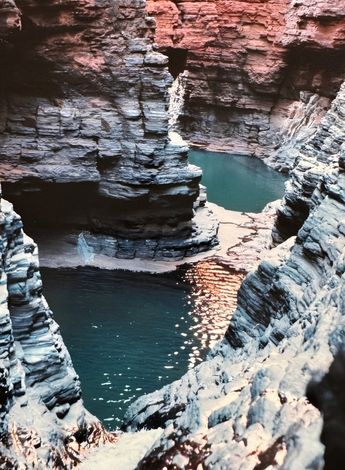
Leonie captured many photographs of wildlife and amazing scenery in the Pilbara.
However, she believes physiotherapists should not underestimate the value of the analytical skills they already possess.
‘You don’t have to be perfect. First and foremost, we’re trained to think analytically. And that’s a strength.’
That mindset has allowed Leonie to continue to expand her own knowledge and skills throughout her career.
She describes herself as a generalist physiotherapist with a particular interest in chronic pain, completing pain PD training and continuing to build on her knowledge through further education, reading and PD (online and, when possible, face-to-face).
She is a member of the APA Women’s, Men’s and Pelvic Health national group as well as the Musculoskeletal, Pain and Mental Health groups.
Her approach is one of continued learning rather than attempting to define a career by a single clinical niche.
It is a philosophy she believes applies well beyond rural practice.
‘You don’t have to stay in a niche. You spend your life learning, so being open to continuous improvement is really important.’
Tapping in
Leonie believes online education has made a significant difference to PD opportunities in rural, remote and regional areas.
While the shift to online learning during the COVID-19 pandemic helped increase PD accessibility, she says there is still work that needs to be done to ensure that rural, remote and regional practitioners are not inadvertently excluded from PD opportunities.
‘Some things need to be in person,’ she acknowledges, adding ‘but it can be difficult if you live a long way away.’
Supporting rural health, she says, is ultimately about more than making PD convenient.
It is part of addressing a workforce that is essential to the health of communities outside Australia’s metropolitan centres.
The rural health advocate says favourable clinical placements can play an important role in attracting physiotherapists to rural and remote practice.
In her experience, the two strongest predictors that someone will ultimately work rurally are that they grew up in a rural or remote area or they had a positive clinical placement there.
Her own career is a shining example of the latter.
‘For people who might be considering a rural or remote career, or who hadn’t considered it but think that it might be a good opportunity, they should try it out.
'Even if it is something like a locum position.’
Find your community
A sense of belonging is something Leonie believes is essential for anyone considering a move to a rural or remote community.
Becoming a part of the community rather than simply living there can make the difference between feeling isolated and discovering the richness of rural life.
In Muswellbrook, Leonie has found her community through the local music scene.
Those connections are not incidental to rural life; they are a part of what makes it work.
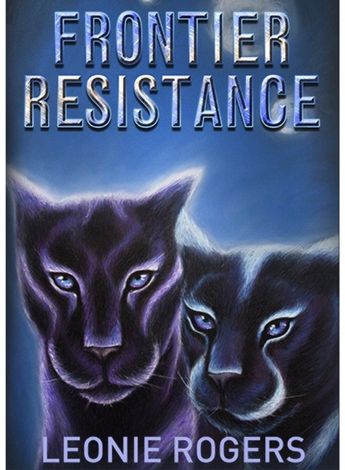
The cover of one of Leonie's published books.
Away from physiotherapy, Leonie has maintained another longstanding passion: writing.
She has published five science fiction and fantasy novels and has just completed a sixth (see below).
She works three days a week and spends one of her days off writing in a cafe, an activity she describes as ‘really good for your brain’.
It is another example of a career that has never fitted neatly into one box.
Physiotherapist, rural health advocate, community member and author are all parts of Leonie’s life and she has no immediate plans to retire.
After almost four decades in the profession, Leonie is aware that her generation represents an important part of the existing rural and remote physiotherapy workforce and she worries about what will happen when experienced clinicians eventually step away.
‘Australia lives on the back of its farmers and its miners. They deserve healthcare. And they deserve good healthcare.’
To explore Leonie Rogers’s views on rural health and join the discussion yourself, visit PhysioHub’s rural health community at hub.australian.physio
Supporting rural physiotherapists
Accessing PD opportunities for rural, regional and remote physiotherapists can often involve long travel distances, accommodation costs and time away from work.
Recognising these challenges, the APA is expanding flexible education pathways and financial support to improve access for members outside of metropolitan centres.
A key focus has been increasing flexibility through hybrid and online learning. New hybrid technology is being introduced across several APA state branches, while recorded live online lectures are now included in the registration fee at no additional cost.
The APA is also exploring more free PD opportunities and will again deliver its popular Rural Refresher online symposium in 2027.
A rural pathway to titling and specialisation is being explored through the Australian College of Physiotherapists.
The new Sports Level 1 and 2 and Musculoskeletal Level 2 courses are being redesigned using a flipped classroom model.
Theory is completed through interactive e-learning before participants attend face-to-face sessions, reducing travel time while preserving valuable hands-on learning and clinical feedback.
For members who do need to travel, the APA offers practical support to ease the financial burden.
A distance discount is available for members who need to travel more than 100 kilometres to attend PD, some state branches offer discount accommodation rates and rural members can apply for conference bursaries to attend FOCUS and APASC, including funding towards airfares.
These initiatives reflect the APA’s commitment to ensuring physiotherapists in rural, regional and remote communities can continue developing advanced clinical skills, connect with peers and deliver high-quality care regardless of postcode.
Visit here to find out more about what the APA is doing for rural and regional physiotherapists.
Crossing new frontiers
There is another side to Leonie Rogers. Alongside her career as a physiotherapist, Leonie is an accomplished science fiction and fantasy writer, with five published novels across two series: the Frontier trilogy – Frontier incursion,
Frontier resistance and Frontier defiant – and the first two books in The Albatar chronicles – Amethyst pledge and Dark days.
Writing has been a longstanding passion for Leonie.
She began writing during high school and later returned to fiction after years of combining physiotherapy with family and rural life in Australia.
Leonie has also been involved in The 1897 war of the worlds – in real time, a collaborative, fictionalised retelling of HG Wells’s classic story, which was released day by day in June 2023.
Visit here for more about her books.
© Copyright 2026 by Australian Physiotherapy Association. All rights reserved.