Seeking physios for PACE-RURAL research
Clinician-researchers living in regional, rural and remote regions implement a novel pathway of care for people with chronic musculoskeletal conditions.
Musculoskeletal (MSK) conditions are the leading cause of disease burden in Australia and access to high-value care remains inequitable.
Traditional MSK care pathways contribute to the burden by following a biomedical, stepped-care model.
Few people are offered evidence-informed care (eg, education, exercise) and patients are quickly ‘stepped up’ to higher-cost, often unnecessary care such as imaging, surgery and preventable hospitalisations.
People in regional, rural and remote areas can face additional challenges accessing specialist allied health services.
A team of clinician-researchers, led by Professor Trudy Rebbeck FACP from the University of Sydney, has secured $2.5 million from the Medical Research Future Fund to implement and evaluate a pathway of care for people with MSK conditions.
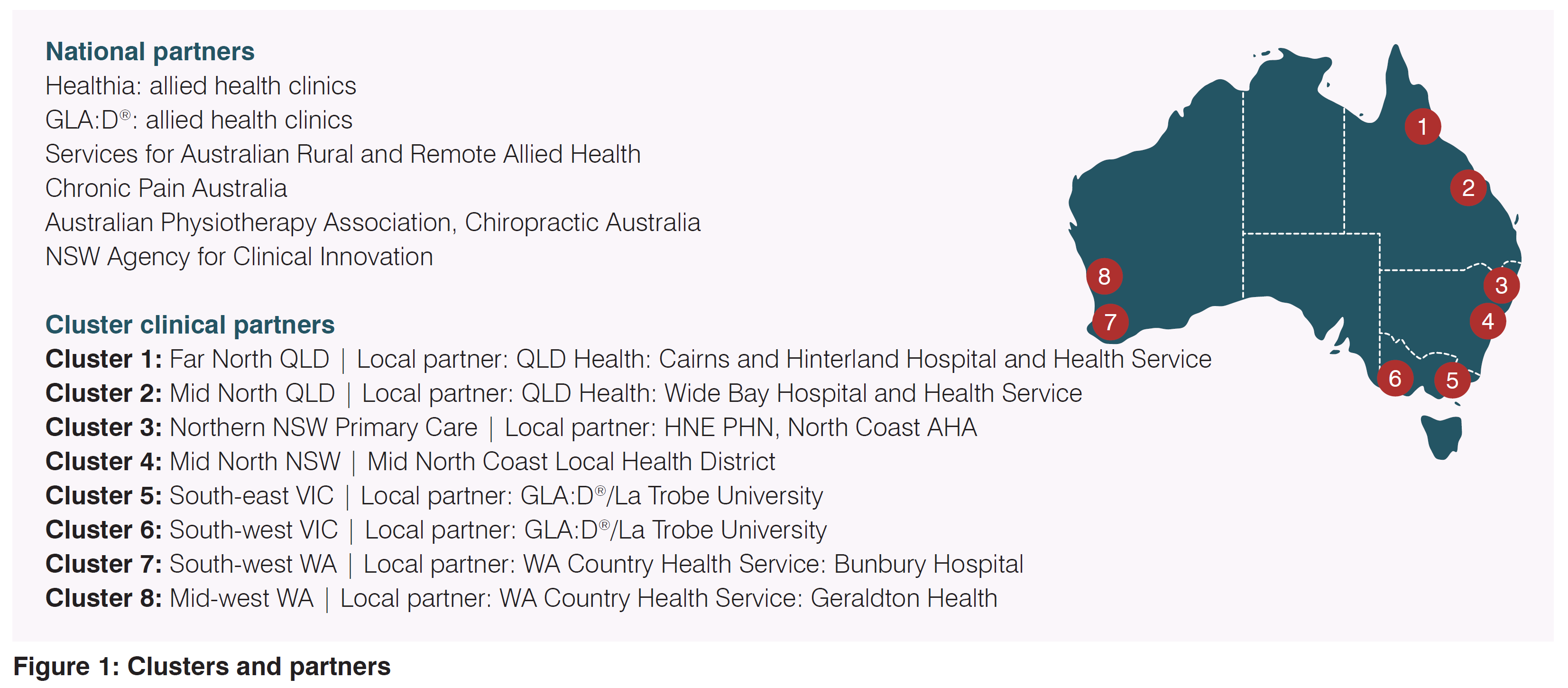
The five-year project (2024–2029)—PAthway of CarE for people with chronic musculoskeletal conditions living in RURAL Australia (PACERURAL)— will be conducted in eight regions across Queensland, New South Wales, Victoria and Western Australia.
Aims
PACE-RURAL aims to transform how care is delivered to people with MSK conditions living in regional, rural and remote communities.
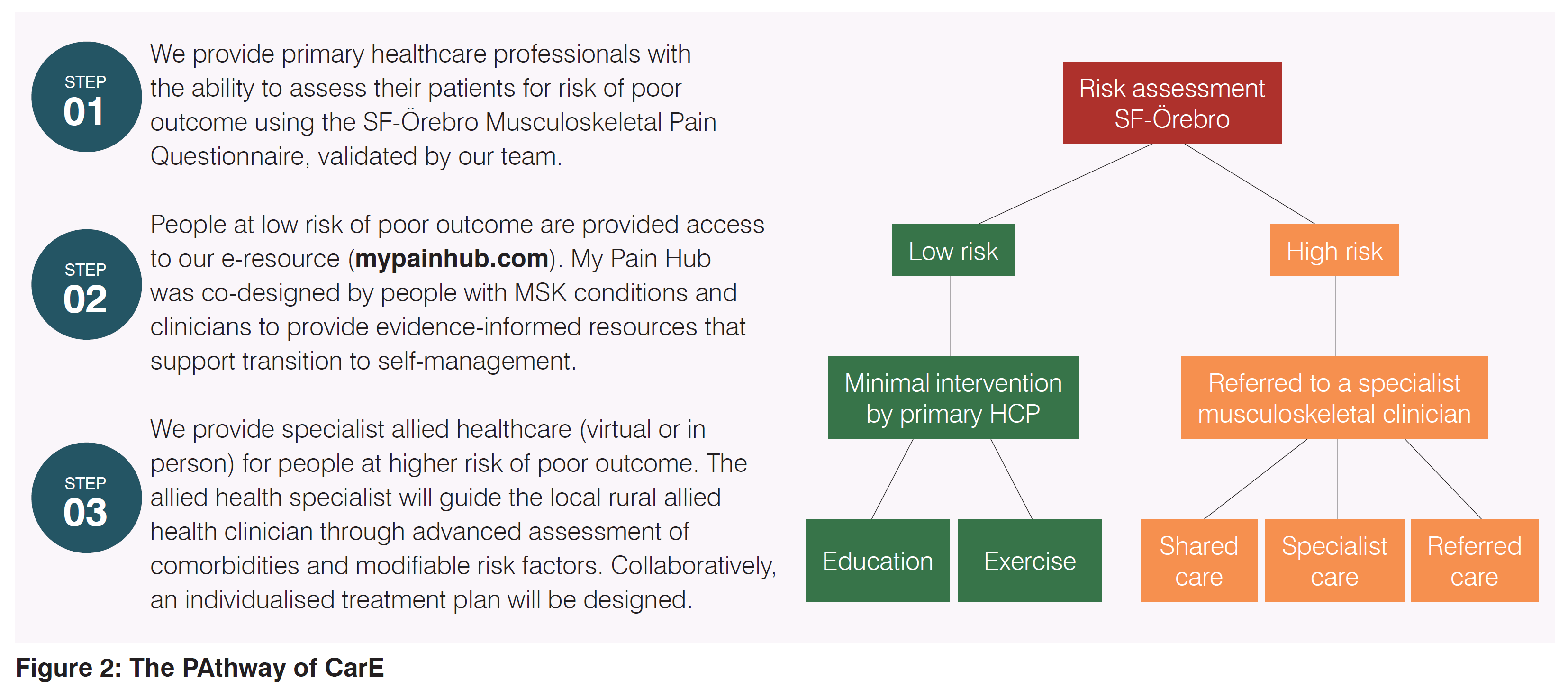
The study will implement a risk-stratified approach where patients are assessed for their likelihood of poor outcome.
Those at low risk (ie, those who should do well) receive guideline-based care supported by an online resource (mypainhub.com) to help transition to self-management.
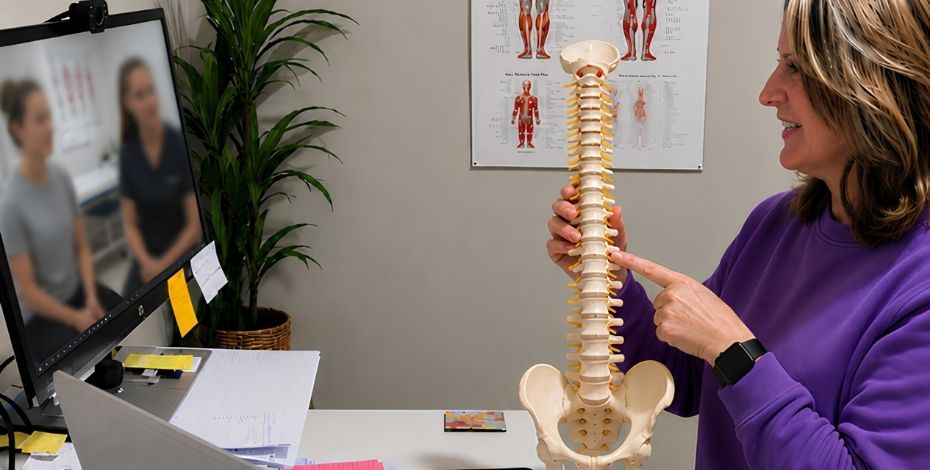
Patients at high risk of poor outcome are referred to a specialist physiotherapist, who will then collaborate with the patient and the patient’s physiotherapist (or other primary healthcare professional) via telehealth to determine the most appropriate care pathway.
‘Our goal is to provide people at high risk of poor outcome with timely access to expert physiotherapy care, which has traditionally been difficult to access outside of metropolitan areas,’ says Trudy.
‘This approach aims to improve patient outcomes while reducing unnecessary medical specialist referrals and interventions.’
Approach
PACE-RURAL is a hybrid type II effectiveness-implementation trial using stepped wedge cluster randomisation.
There are eight clusters involved in the trial, representing eight different Australian regions (Figure 1).
Each cluster initially provides usual care and then transitions to the PACE-RURAL pathway.
Phases
There are three key phases in the study.
In phase 1, participating clinicians complete a baseline questionnaire and, over a six-month period, recruit at least two patients to be involved in the study.
During this period, clinicians provide their usual care.
In phase 2, prior to implementing the PACE-RURAL pathway, participating clinicians attend a half-day workshop (online and/or in person) in their region co-designed by them for their needs with specialist MSK clinician-researchers.
In phase 3, over the next six months, clinicians are asked to invite at least two more patients to be involved in the study.
Those at high risk will be offered a co-consultation with a specialist physiotherapist via telehealth.
Those at low risk are provided with guideline-based care and access to mypainhub.com (Figure 2).
‘Telehealth provides a great way for patients and clinicians to connect and explore management strategies together,’ explains Associate Professor Kerrie Evans FACP, also from the University of Sydney and Healthia Limited.
‘This model enables real-time clinical reasoning and collaboration, with the aim of improving outcomes for people living with musculoskeletal pain.’
Opportunity to connect
PACE-RURAL offers a great opportunity to be involved in a study that aims to deliver better health outcomes for people with MSK conditions and to ensure efficient and appropriate use of medical services.
Importantly, PACE-RURAL aims to connect physiotherapists and facilitate collaborative care for people at risk of poor outcome.
‘Many rural clinicians tell us they feel isolated when managing people with complex presentations,’ notes Dr Darren Beales FACP from Curtin University.
‘PACE-RURAL creates supportive professional relationships while enhancing clinical skills and improving patient outcomes.’
How to participate
If you are a physiotherapist working in regional, rural or remote settings in New South Wales, Victoria, Queensland or Western Australia and regularly see people with MSK conditions, you can join the PACE-RURAL study. To express interest in participating, email the research team directly at pace.study@sydney.edu.au and visit linkedin.com/company/pace-rural for updates.
© Copyright 2026 by Australian Physiotherapy Association. All rights reserved.