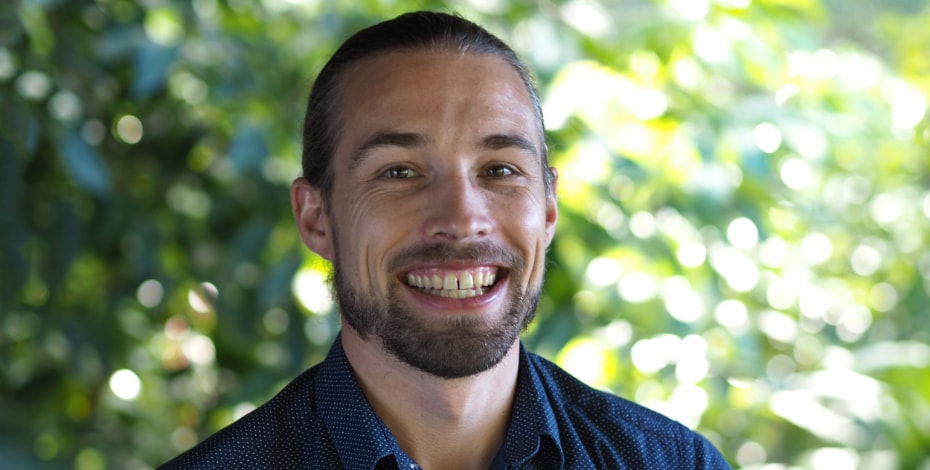
Curtley Nelson always wanted to be a positive role model for his three younger brothers. A descendant of the Dunghutti nation in northern New South Wales, Curtley moved locations as a child and found himself in a job that wasn’t quite right. Now the ex- soldier is embarking on a career to set an example for his siblings and help the broader community.
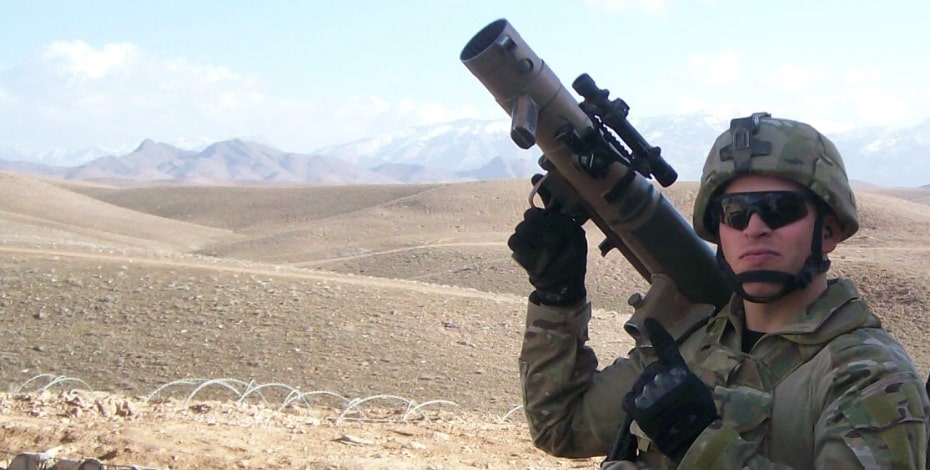
It was in the deserts of Afghanistan that Curtley Nelson started looking at the world differently. As a serving member of the Australian Defence Forces on active duty in the war-torn region in 2012, Curtley was on the frontline and had his eyes opened to experiences of people living in combat zones. This shift in perspective set off a chain of events that saw Curtley return to Australia and, ultimately, change his career.
‘The army gave me a lot of opportunities but I also faced a lot of challenges, and although it was a tough time in my life it opened my eyes to how different the world really is and made me consider what I truly value,’ Curtley says. ‘When I came home from Afghanistan I was ready for a change in professions, I was searching for something that provided me better work life balance while still challenging myself.’
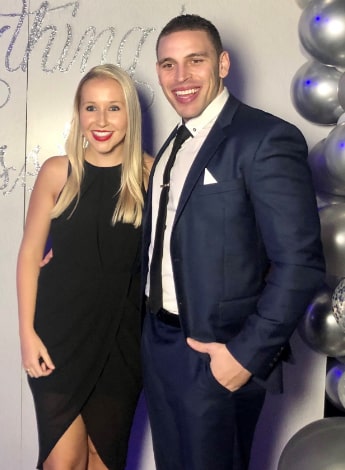
Determined to join the Queensland Police Service, Curtley filled out all the paperwork, undertook the requisite testing and had everything signed and ready to go in February 2015 when his partner Jessica Nosworthy, an occupational therapist who holds her master’s in clinical rehabilitation, challenged him to really think about where he wanted his career to go.
‘My partner said, “Why don’t you challenge yourself a little bit more? You’re smarter than you think.” And I said, “No, I’m not,” as I do. She said, “Why don’t you do something that you actually like, and something that challenges you cognitively rather than just physically? Apply for university and if you get in, you get in. If you don’t, then you can continue on joining the police force.” And lucky enough, with her help and the Aboriginal and Torres Strait Islander community at Queensland University of Technology (QUT), I was able to write an application to secure a position studying exercise and sports science. And that’s when I started my university journey,’ he says.
After 12 months of study, Curtley had developed an understanding of allied health and learnt more about the role of physiotherapy, and he made the call to switch degrees to study physiotherapy at the University of Queensland (UQ). He says: ‘I worked pretty hard in my first year of exercise and sports science to make sure I had a high enough GPA to transfer into physiotherapy at UQ. I connected with the ATSI unit at UQ early on, they assisted me to transition to the new university. Everyone there was so helpful.
‘I really want to somehow incorporate all the support that is available to Indigenous students to achieve great things within this profession. The ATSI unit at UQ and at QUT offered me free tutoring, stationary supplies, text book support, quiet learning and a community to really thrive,’ he says. ‘Because they had given so much to me I really wanted to give back to my community so I too started tutoring other Indigenous students at UQ and then started volunteering at IUIH.
It was also during his first year of physiotherapy studies that Curtley began volunteering with the Institute for Urban Indigenous Health (IUIH) in Brisbane, Queensland. This, he says, was driven by his desire to help people as well as wanting to connect with the Aboriginal and Torres Strait Islander community in Queensland. The volunteer work saw him attend community events such as Murri carnivals as well as working with children at The Murri School.
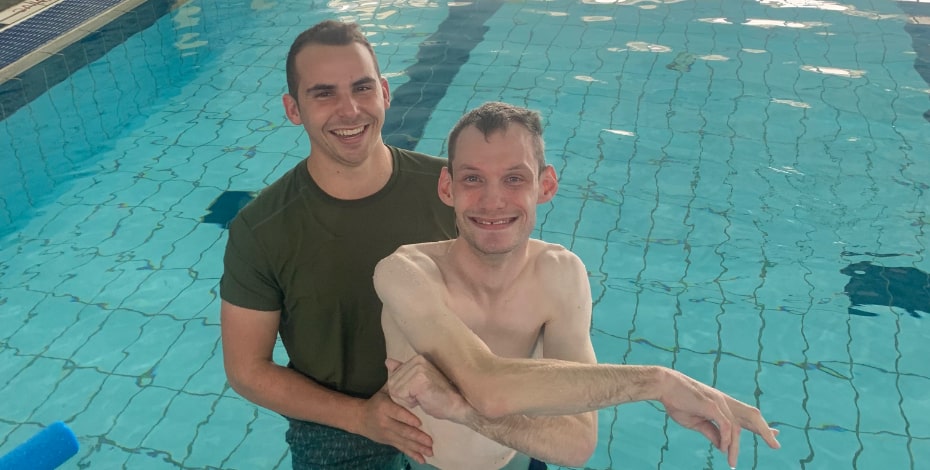
Although not all of the volunteer work at the IUIH was directly related to physiotherapy, it made a huge impact on Curtley’s life and became his first preference for placement in his final year of study at UQ. During that five-week placement, Curtley had the opportunity to put his physiotherapy skills to good use, working with a caseload of mainly musculoskeletal conditions and consulting with general practitioners and allied health workers from across a broad spectrum of healthcare.
‘You had people coming in with a range of conditions such as cardiothoracic issues or neurological conditions, which made it really challenging as no two patients were the same. But it was something that I really enjoyed, I love being challenged,’ Curtley says.
The placement opened doors for Curtley to apply for a permanent role as a physiotherapist at IUIH when it became available. Last month, Curtley started in that role and he has been treating patients in a variety of settings, including a number of IUIH-designated clinic spaces throughout south-east Queensland and at the IUIH centre in Windsor.
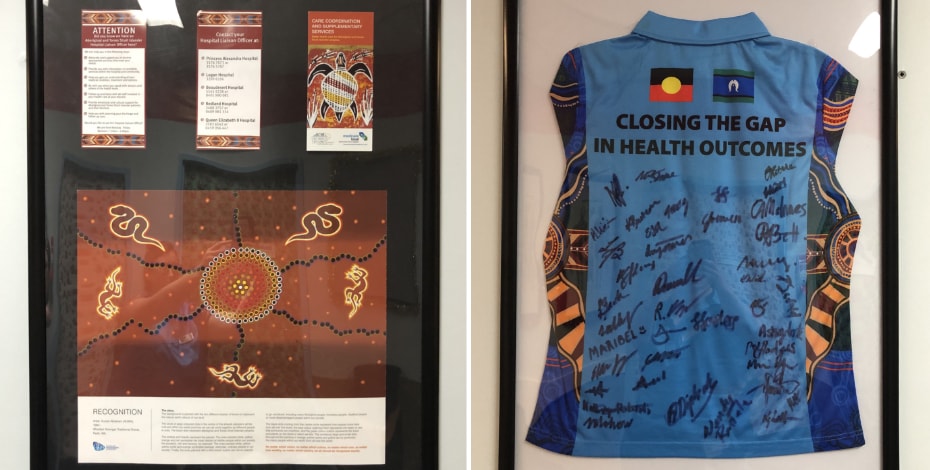
An important part of his role involves educating the community about how physiotherapy can make a difference in patients’ lives and how to deliver culturally safe services for other heathcare workers in different clinical settings. This, Curtley says, is crucial to working towards closing the gap in the areas of health and life expectancy for Aboriginal and Torres Strait Islander people.
‘Growing up, I didn’t have access to physiotherapy and therefore had no idea what it was,’ Curtley says. ‘When I go back home now, I try my best to educate my family and community on what physiotherapy is and how beneficial it can be. I do still get people thinking I am a “remedial massage therapist” which indicates that we still have a long way to go as a profession to increasing access and education around physiotherapy.’
In his role at IUIH, Curtley will be treating conditions such as acute muscular injuries, rehabilitation before and after surgery, treating chronic conditions such as chronic obstructive pulmonary disease and cardiac disease, offering rehabilitation for neurological conditions such as stroke, brain injury and spinal cord injury, treating incontinence and women’s health issues and offering advice and assistance with mobility and balance in the home.
National Close the Gap Day this month encourages people across the country to share information and take meaningful action in support of achieving Indigenous health equality by 2030. This resonates with Curtley, who is motivated to break down the barriers that impede access to physiotherapy and other allied health services for the Aboriginal and Torres Strait Islander community.
‘I am a strong believer that there is so much potential for physiotherapy to have a huge positive impact for our Aboriginal and Torres Strait Islander communities. There is a lot of involvement that we, as physiotherapists, can have as our profession is so diverse,’ Curtley says. ‘We can provide a great deal of support to help people get back to doing what they want, need and love to do. I believe physiotherapy can lead the way for allied health to support closing the gap. The APA is leaps and bounds ahead of other professional bodies in their commitment to achieving this.
‘One thing I have noticed working in this space is that education is key in the community, especially on what physiotherapy is and why it is beneficial and important to wellbeing. I really believe that; I want to ensure that everyone has a good understanding of physiotherapy so they get that equal opportunity and access they need.
‘I want physiotherapy to be seen as a safe and supportive option to obtain healthcare advice and support. There is a lot of intergenerational mistrust around medicine and doctors but physiotherapy has the power of touch—we have the power to build rapport, gain trust and make changes unlike any other profession.’
Finding his way to physiotherapy a little later in life has given Curtley a unique perspective on ways that he can work with his community and individuals to build up a level of trust and connectivity.
‘First I want to know them, their journey, their story and how they wound up seeing me. This helps build rapport but also acknowledges that not everyone has had an easy journey or access to healthcare. Often people will come with preconceived ideas of how they think they can or can’t go about completing a task, and we need to respect that. As physios, we need to ensure we are being patient-centred and this means acknowledging their level of readiness to accept new information or advice from us. Sometimes this is a slow journey but we walk this journey together, step by step.’
Curtley, who is on the APA Aboriginal and Torres Strait Islander Health Committee (ATSIHC), says he also wants to encourage other Indigenous physiotherapy students in the same way he was encouraged. One of those he credits with opening his eyes to all that is available to him as a physiotherapist working within the Indigenous health space is APA ATSIHC chair, APA Sports and Exercise Physiotherapist Michael Reynolds. He also acknowledges the mentorship and support he received from other ATSIHC members, particularly Kathryn Potter and Lowana Williams, who he says have gone above and beyond to support him. And although not a physiotherapist, Curtley acknowledges the big role his partner, Jessica, played in his journey through physiotherapy as she constantly reminded him that multidisciplinary collaborative practice is key.
‘Some advice I could offer students is to be open-minded when going into the profession. There are going to be highs and lows but there are also going to be hundreds of opportunities thrown your way to make a positive change in multiple people’s lives no matter what area you go in to,’ he says. ‘Physiotherapy is moving forward as a profession day by day, and we have the chance to have our say and shape the way our profession moves into the future. Not every industry can say this.’