
Digital health and telehealth

A robot typing on a computer
INMOTION 29 Apr, 2026

When AI writes software, who builds healthcare?

Healthcare software is increasingly being written by AI. Barry Nguyen looks at what this could mean for physiotherapists.

Artificial intelligence (AI) can now write large amounts of working software. Tools such as Claude Code, OpenAI Codex, Replit and Lovable allow developers to describe what they want in plain English and generate functioning applications in minutes. 

Two men are standing on a sports field. They are both wearing the iX Cricket pro watch.
INMOTION 30 Mar, 2026

Finalists showcase innovation at Pitchfest

PHYSIO PITCHFEST While there were only two winners at the 2025 Physiotherapy Research Foundation Physio Pitchfest, held during the APA’s national conference APASC25, the shortlisted finalists were strong contenders. Adam Daniels, whose iX Cricket Sports Watch aims to change the way bowlers measure load, and Julie Sheahan, who has developed an easy-to-use ankle strap for seated leg exercises, talk about their innovations.

A box labelled AI, surrounded by caution signs
INMOTION 27 Mar, 2026

Informed consent in the age of AI

The APA’s insurance partner BMS and Scott Shelly and Alexander Sheridan of health law firm Barry Nilsson discuss informed consent and physiotherapists’ obligations in the use of AI tools.

Two women undertaking a reformer pilates class
INMOTION 25 Mar, 2026

Snapshots of the latest research

The April issue answers diverse questions with a consistent answer: physiotherapy delivers meaningful impact when it is accessible, evidence-informed and implemented well. Scientific editor Mark Elkins provides a summary of the content.

Should the abdomen be relaxed or contracted during Pilates exercise for low back pain? 

A randomised trial from Brazil tackles a longstanding assumption in Pilates-based rehabilitation: that consciously contracting the abdominal wall during exercise enhances outcomes. 

A woman holds her lower back as if experiencing low back pain.
INMOTION 25 Mar, 2026

Physiotherapists lead public health's virtual program for low back pain

Virtual physiotherapy care may be just as powerful as a hospital bed for non-serious low back pain. At the APASC25 scientific conference in Adelaide, Dr Chathurani Sigera described how the Back@Home program in Sydney is helping patients recover in their own homes.

Low back pain is a condition amenable to conservative, movement-based care led by physiotherapists, yet it continues to be one of the most common and costly reasons Australians present to emergency departments (EDs).

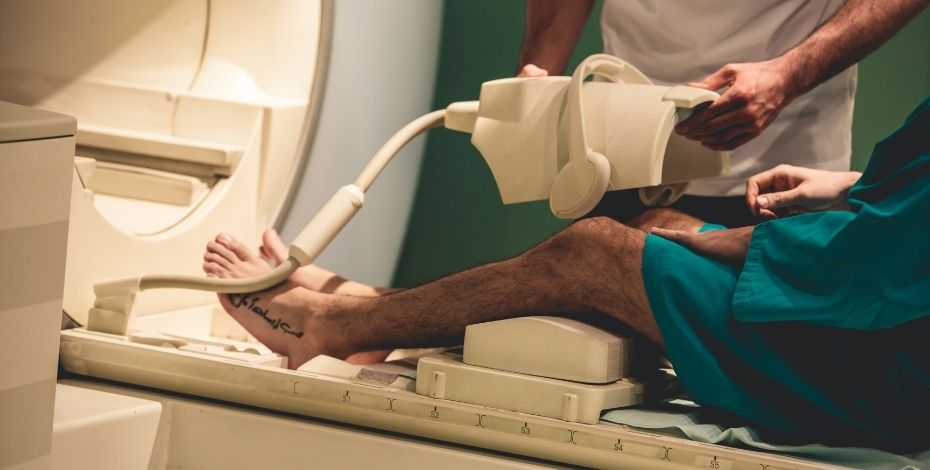
The image shows a patient about to undergo an imaging scan on his leg. A technician is holding a cover.
INMOTION 25 Feb, 2026

Smoothing the path for referrals

A digital platform that streamlines and speeds up the process of referrals for scans and specialist care won the 2025 Physiotherapy Research Foundation Physio Pitchfest People’s Choice Award at the APASC25 conference last year.

When sports physiotherapist Daniel Patterson APAM worked in pro sport as a young physiotherapist, the multidisciplinary team that surrounded him included medical staff who were always on hand to write prescriptions and referrals for imaging or for specialist care when needed. 

A person typing at their computer
INMOTION 23 Feb, 2026

The ghost in the consultation room

Barry Nguyen explains the pitfalls of patients relying on AI for diagnosis and how to navigate the ChatGPT era as a clinician.

The patient arrives with an MRI report in one hand and a smartphone in the other. Before you’ve even performed a single provocation test, they present you with a neatly bulleted ‘recovery road map’. 

This isn’t a collection of disparate Google searches. 

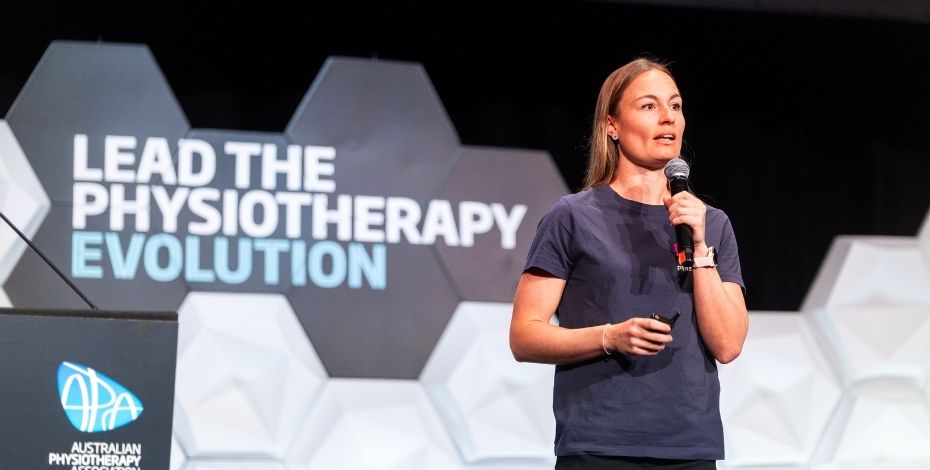
The image is of Plasticise co-founder and physiotherapist Sarah Turner presenting at Physio Pitchfest
INMOTION 30 Jan, 2026

Exercise prescription wins Physio Pitchfest

PHYSIO PITCHFEST An app that allows clinicians to film the exercise they want their patients to do at home took out the 2025 Physiotherapy Research Foundation Physio Pitchfest Judges’ Award at the APASC25 conference last year.

Compliance with exercise programs is something that most physiotherapists and their patients struggle with. 

the image is of Associate Professor Mark Meroli speaking at APASC25
INMOTION 01 Dec, 2025

APASC25: Adapting for the future

Attendees were literally spilling into the aisles at the mini keynote session about the power and potential of digital health technology. 

Speaking in the context of workforce capability, Associate Professor Mark Merolli MACP, a clinician and digital health and informatics researcher from the University of Melbourne, emphasised that digital technologies are becoming paramount to physiotherapy practice. 

‘We’ve entered into that age where technology literacy, technology skills are changing the very DNA of what it means to practise in healthcare.’ 

Associate Professor Elizabeth Lynch talking at APASC2025
INMOTION 01 Dec, 2025

APASC25: Co-design and lived experience

Co-design is an important aspect of physiotherapy research and affects all stages of the research process. In a mini keynote session at APASC25, a panel of physiotherapy researchers and their co-investigators with lived experience discussed how co-design can and should be implemented and its impact on research.