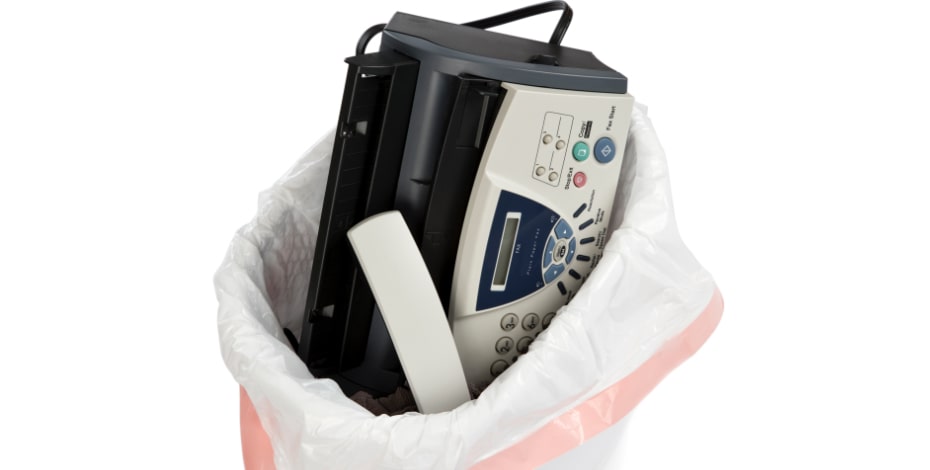
As most areas of industry embrace the digital world for a quicker and more seamless communication experience, it seems the health system is unable to shake off the fax machine.
Two years out from the National Digital Health Agency’s goal of delivering a digital solution to integrate communication tools between Australian health providers, physiotherapists say much work still needs to be done, with fax machines continuing to dominate the industry.
Compounding concern about the use of the antiquated machinery as a key communication tool between health professionals is the rollout of the National Broadband Network (NBN). According to accc.gov.au, the introduction of the data network project has forced the disconnection of the majority of existing landline and internet services. This includes devices such as fax machines, security and medical alarms.
Removing the fax machine from healthcare has been difficult due to its perceived security and interoperability between health professionals. Yet, as technology continues to pervade the health industry, email—widely embraced in many industries for its ease-of- use, compatibility and simplicity—is also considered problematic, with a lack of security cited as a key reason why it cannot be used to transmit sensitive healthcare information. However, digital replacements that enable secure messaging—encrypted email platforms—have struggled to achieve full adoption because most systems are not interoperable, which means messages from one proprietary system cannot be sent to another.
As a result, physiotherapists are being forced to seek ‘stop-gap’ digital solutions such as electronic faxing, that marries faxing with emailing to ensure data security.
Alan Gray, APAM, recently invested in digital technology at his Adelaide clinic, PhysioFit-SA. The ‘whole of practice’ digital overhaul in finance, records management and appointments was partially expedited by the NBN.
Says practice manager Kirsty Holberton: ‘Bringing in the NBN and taking out the phone lines meant systems, such as printers, scanners, fax machines, was not compatible with the NBN - and the cost to upgrade was prohibitive.’
As the practice reviewed electronic systems for alignment to the clinic’s compliance and governance protocols, Alan also requested feedback about readily available electronic faxing systems from his peers through the national APA Business Group’s Facebook page.
‘It did generate a bit of conversation, and it was interesting to see that so many practitioners are struggling with the multiple electronic fax solutions out there,’ he says.
APA Business Group vice chair Lilly Kochen, APAM, says a lack of synergy between technology platforms is causing professional frustration, inefficient communication between health professionals and heightened concern for patient welfare and privacy.
‘Currently there are three or four different encrypted email platforms that are not interoperable—and each of your local GP clinics might have a different one, making this technology pretty useless for most physiotherapy clinics to consider for communication.
'So, doctors and physiotherapists are forced to use fax to communicate despite there being many reported cases where using this old technology platform has put patient quality of care and patient confidentiality at risk.
‘We [also] seem to be hampered by old legislation and old technology that has not been reviewed for decades, leaving us caught in a time gap where the health system has failed to adapt and keep up with evolving technology. The government, which funds all the technology for GP clinics, could help resolve this issue by choosing one encrypted email service to roll out to doctors, hospitals and allied health professionals. Then all health professionals would be able to communicate securely without fax and the issue could finally be resolved.’
The National Digital Health Agency’s website, digitalhealth.gov.au, states that a key priority of its strategy is to ‘end dependence on the fax machine and paper-based correspondence’. Sectors within the health industry that are being guided to embrace ‘secure digital channels’ include the Royal Australian College of General Practitioners.
While the National Digital Health Agency describes faxes as being a ‘technological dead end’ and ‘inherently insecure and unsafe’, some countries have taken a more definitive stance and implemented an outright ban of the machines. In the UK, the National Health Service will phase out fax machines by 31 March this year.
However, some Australian GPs are pushing for a quicker demise of the fax machine nationally, publicly campaigning for the outdated system to be removed from the medical profession. A vocal advocate is Victorian GP Dr Prem Saranathan, who has told national media that the continued use of the antiquated technology could have ‘dire consequences’.
‘In the past you would get one in 100 faxes fail. With the NBN because we’re trying to transmit 1960s analogue technology through a 2020 digital framework, we’re getting one in two or three faxes fail,’ he told 9News in February.
Adds Lilly: ‘We know of incidences that information has gone, sometimes repeatedly, to the wrong fax number. If a medical clinic gets just one digit of a fax number wrong they may be unaware that they are sending personal information to the wrong place or a referral for assessment or treatment may never be received, impacting hugely on the patient’s health journey, sometimes with major medical consequences. With encrypted email, a simple return message would alert the clinic and the email would be unable to be opened by anyone unintended.’
In 2018 a Victorian coroner took aim at the old technology after a man died because vital health information was faxed to the wrong number. Coroner Rosemary Carlin said it was difficult to understand why such an outdated and unreliable means of communication exists in the medical profession.
As for physiotherapists, they are caught in the middle of an ongoing debate, says Lilly. ‘This is not something that we can easily remedy, this has been going on for at least 10 years and remains unresolved. The available software platforms don’t communicate on purpose.
'The issues and risks will remain without any good resolution unless the government intervenes. So good on the GPs for rattling the cage.’
As for PhysioFit-SA, the team has gone with an Australian-based e-faxing platform because it offered better security.
Says Kirsty: ‘Different countries have different laws relating to hosting information and we found that this platform would enable us to keep our existing fax number; plus, transmitting and receiving information within local waters means Australian privacy laws must be followed.'
Even though there is no integration between digital platforms hosting each business process, Kirsty describes the going-digital transition as smooth. Although having to communicate with GPs via fax remains an issue.
‘At the end of the day we still have to have a level of fax use because of the GP usage, and if we need to send information to a legal team we will mail or deliver a hard copy.’
Despite the uncoordinated investment in technology exacerbating industry concerns about siloing communication, Lilly says physiotherapists should continue to invest in digital capabilities.
‘While we would love a compatible system for four key tasks— communications, recording notes, managing our diary and a practice management program—the government first needs to legislate so programmers are forced to talk. Technology is a big investment for a business owner, so it would be brilliant if it all can be compatible.’