
Clinical practice and scope

A family takes their dog for a walk.
INMOTION 01 Oct, 2026

ACTIVATE reaches consensus on physical activity

PHYSICAL ACTIVITY Recommendations on assessing, prescribing and promoting physical activity in clinical practice have been recently published as an international consensus statement. Consensus member Professor Maria Constantinou talks about the recommendations.

A recent consensus study conducted by an international team of researchers aims to provide a framework of recommendations for physical activity assessment, prescription and promotion in clinical practice (Bricca et al 2026). 

A cancer patient sits at home waiting for his physiotherapist to arrive, as it is a mobile service.,
INMOTION 24 Sep, 2026

Bringing cancer care to the patient

When Benjamin Gold’s wife Nicole Iglicki was diagnosed with breast cancer just before the COVID-19 pandemic, their lives became dominated by hospitals, surgery and chemotherapy. Nicole’s having to travel to care when she was feeling low sparked an idea for Benjamin: what if cancer rehabilitation and allied healthcare could come to the patient?

It was a simple observation born from personal experience: rather than asking an already exhausted cancer patient to travel to care, what if the care could come to them? 

The image is an illustration of a builder's scaffold.
INMOTION 01 Sep, 2026

Building stronger foundations for stroke care and rehabilitation

The recent launch of the updated Stroke Clinical Care Standard, coupled with the Stroke Foundation’s Living Clinical Guidelines for Stroke Management, provides Australian physiotherapists with a comprehensive, evidence-based framework for best practice care. Here, the two sets of recommendations are examined to understand how they work together and what physiotherapists should know about them.

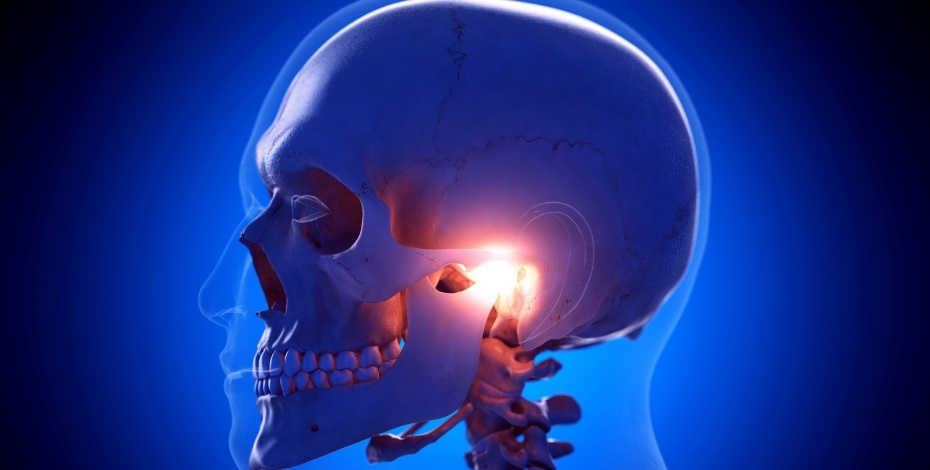
Graphic representing temperomandibular disorder
INMOTION 28 Aug, 2026

First-line management of TMDs

Researchers are looking at the factors infl uencing the community’s use of physiotherapy services for management of temporomandibular disorders.

Dr Alana Dinsdale APAM started working clinically in 2012, predominantly in the musculoskeletal space, but didn’t initially think about getting into research.

However, after treating many patients with neck problems, and particularly temporomandibular disorders (TMDs), she realised there was a gap in the research for TMDs from a physiotherapy rehabilitation perspective.

A photo of a man returning to the workplace after being injured with a broken arm. His colleagues are greeting him.
INMOTION 03 Aug, 2026

Five facts about physiotherapy and return to work

Jess Fenwick, Katia Gould, Blake Hort and Jarryd Croxford of the APA Occupational Health national group present five discussion points on the vital role physiotherapists play in return to work for injured workers.

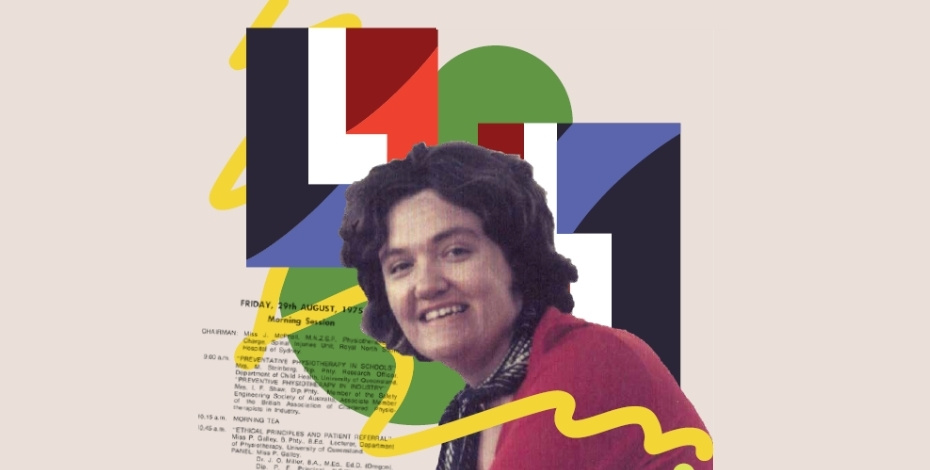
A photo of physiotherapy trailblazer Prue Galley is superimposed over a graphic image representing the 1970s.
INMOTION 03 Aug, 2026

How Australian physiotherapy claimed its independence

Fifty years ago this month, Australian physiotherapists voted to repeal a 70-year-old ethical principle that prevented them from treating patients without a medical or dental referral. That landmark decision transformed physiotherapy in this country and paved the way for Australia to become a global leader in first contact physiotherapy. We look back at the people, politics and courage behind one of the most significant turning points in the profession’s history.

The ballroom at Sydney’s Wentworth Hotel was packed. 

Stars bursting over a golden background
INMOTION 29 Jul, 2026

Practice, progress and possibility

AWARD Bridget Shaw AM’s King’s Birthday honour reflects a career spent helping physiotherapy take on a greater role in patient care and the health system. Marina Williams reports.

Bridget Shaw MACP AM has spent more than 40 years in physiotherapy – across hospitals, education, research, advocacy and service development – as the profession’s role in public health, clinical training and advanced practice has expanded. 

A graphic representation of a neural network
INMOTION 01 Jul, 2026

New Australian standards for pain management education

The new Australian Standards for Health Practitioner Pain Management Education were launched at the 46th Australian Pain Society Annual Scientific Meeting by Dr Noam Winter and Professor Helen Slater, members of the team that developed the standards.

A graphic illustration of heads in silhouette, with connections between them.
INMOTION 01 Jul, 2026

Workshop tests new clinical reasoning framework

A clinical reasoning framework for chronic pain was the focus of a pre-conference workshop at the Australian Pain Society Annual Scientific Meeting.

Clinical reasoning provides physiotherapists and other clinicians with a basis for assessing, diagnosing and managing a patient’s condition. 

However, pain physiotherapists find that the standard clinical reasoning framework doesn’t always match the complexity of a patient with chronic pain. 

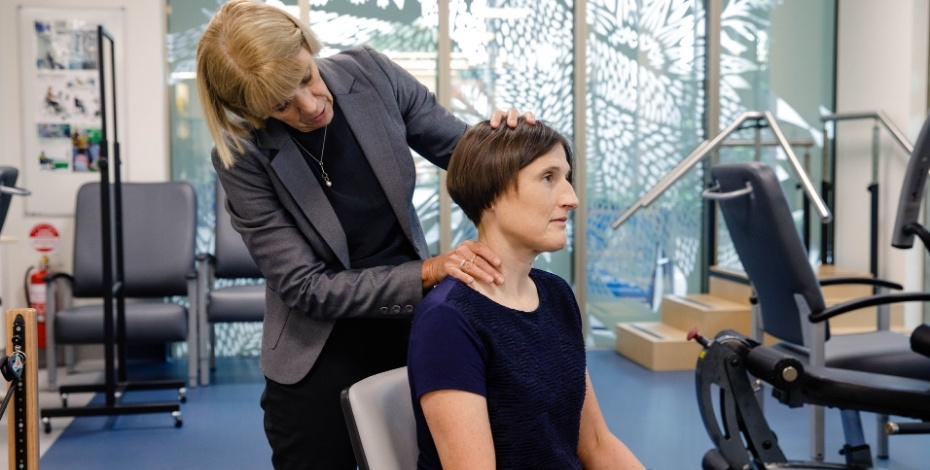
Professor Michele Sterling works with a patient.
INMOTION 01 Jul, 2026

Burning questions drive pain researcher

For more than two decades, Professor Michele Sterling has been at the forefront of pain research, reshaping how physiotherapists understand musculoskeletal injury, chronic pain and recovery after whiplash injury. Michele was recently named in The Australian’s top 250 researchers of 2026 and is the leading researcher in the area of pain and pain management. 

When Professor Michele Sterling FACP graduated as a physiotherapist in 1982, pain was viewed very differently from the way it is today.