Digital health and telehealth

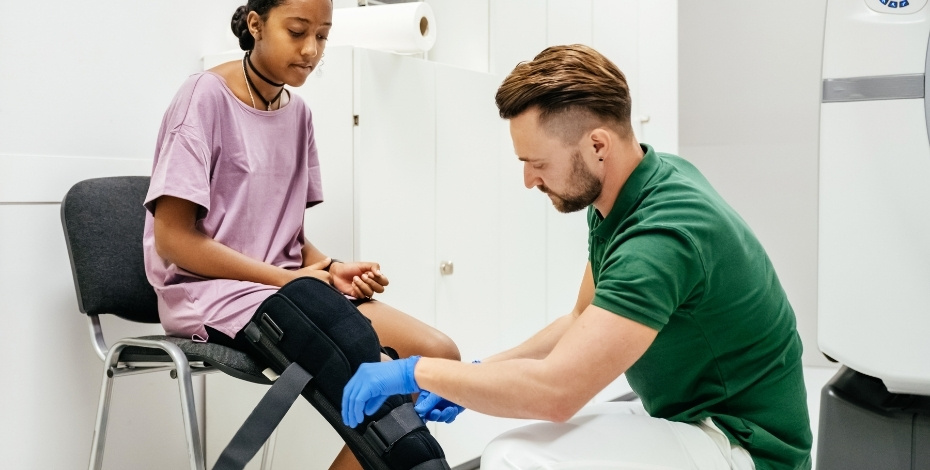
Physiotherapist working with a patient wearing a leg brace
INMOTION 28 Aug, 2026

Building knowledge through research

Explore some of the latest research from the July issue of the Journal of Physiotherapy.

Smallest worthwhile effect of ACL reconstruction

A group of Australian researchers conducted a benefit–harm trade-off study to estimate the smallest worthwhile effect of anterior cruciate ligament reconstruction plus rehabilitation – compared with rehabilitation only – for improving knee function and return to sport. First author Fahd Dibsh agreed to answer some questions about the study. 

Graphic of a computer circuit board and scales
INMOTION 28 Aug, 2026

Embracing AI opportunity while maintaining responsibility

Artificial intelligence (AI) has come to dominate the tech sphere over the past five years and its influence has spread into other fields, including healthcare.

Its growing presence has prompted the APA to release a position statement on the use of AI in physiotherapy.

While other bodies such as Ahpra have already released statements about AI, we felt it was important to provide guidance specific to physiotherapy.

The image depicts several heads in silhouette, with dotted arrows looping around from individual mouths to other peoples' brains.
INMOTION 01 Jul, 2026

Pain and the power of narrative storytelling

Pain researcher Dr Felicity Braithwaite is interested in the power of storytelling to influence people’s beliefs about pain.

For many people with osteoarthritis (OA), their beliefs about their condition and the way they manage it are strongly influenced by myths and misconceptions about OA, such as ‘exercise makes it worse’, ‘the pain is caused by wear and tear in the joint’ or ‘I need a joint replacement because my knee joint is bone on bone’. 

A creative image that suggests a depiction of technological advancements in healthcare.
INMOTION 24 Jun, 2026

Virtual clinic manages spinal fractures at home

When the Spinal Virtual Clinic run out of Royal Adelaide Hospital in South Australia first opened, it managed a handful of patients annually. Fast-forward a decade and the clinic now oversees more than 1000 patients each year, with physiotherapy at the forefront.

For many patients with minor spinal fractures, recovery is less about intervention and more about time. 

Two hands, one human, one robotic, hold up puzzle pieces to each other.
INMOTION 01 Jun, 2026

Accountability in the age of information

Professor Trevor Russell explores ethics, clinical risk and consent in digital physiotherapy practice.

The integration of digital technologies into physiotherapy practice is accelerating rapidly. 

Artificial intelligence (AI), wearable sensors, telehealth platforms and automated clinical tools are no longer emerging concepts. 

Rather, they are increasingly embedded within everyday care. 

A computer-generated conceptual image of technology, featuring an image of a human body with the skeleton displayed x-ray-style, overlaid on computer test, and other technological symbols including graphs and pie charts.
INMOTION 01 Jun, 2026

Working out digital health technology's place in physiotherapy

As digital technologies continue to develop and their use becomes more widespread in healthcare, the ability of physiotherapists to adapt for the future is paramount. Here, based on their popular session at APASC25 in Adelaide last October, Mark Merolli, Leo Ng and Trevor Russell offer insights into the power and potential of digital health technology in clinical practice.

To read their articles, click on the links below: 

An artist's impression of the digital landscape to represent increased uptake of AI.
INMOTION 26 May, 2026

The power of digital technology

Over the course of my career, I have come to see digital technology not as an add-on to physiotherapy, but as a fundamental enabler of high-value care.

My interest began as a business owner. Technology improved communication, streamlined operations and supported more consistent care, creating a better experience for both patients and clinicians. 

My work has since focused on developing and evaluating digital health solutions that extend physiotherapy beyond traditional clinic walls. 

A woman holding a tablet.
INMOTION 26 May, 2026

How should AI be used in physiotherapy?

ARTIFICIAL INTELLIGENCE ADOPTION Pete Haynes considers the ethical implications of how artificial intelligence may support or undermine best practice.

Artificial intelligence (AI) is already entering physiotherapy practice but efficiency alone is not a good enough reason to adopt it.